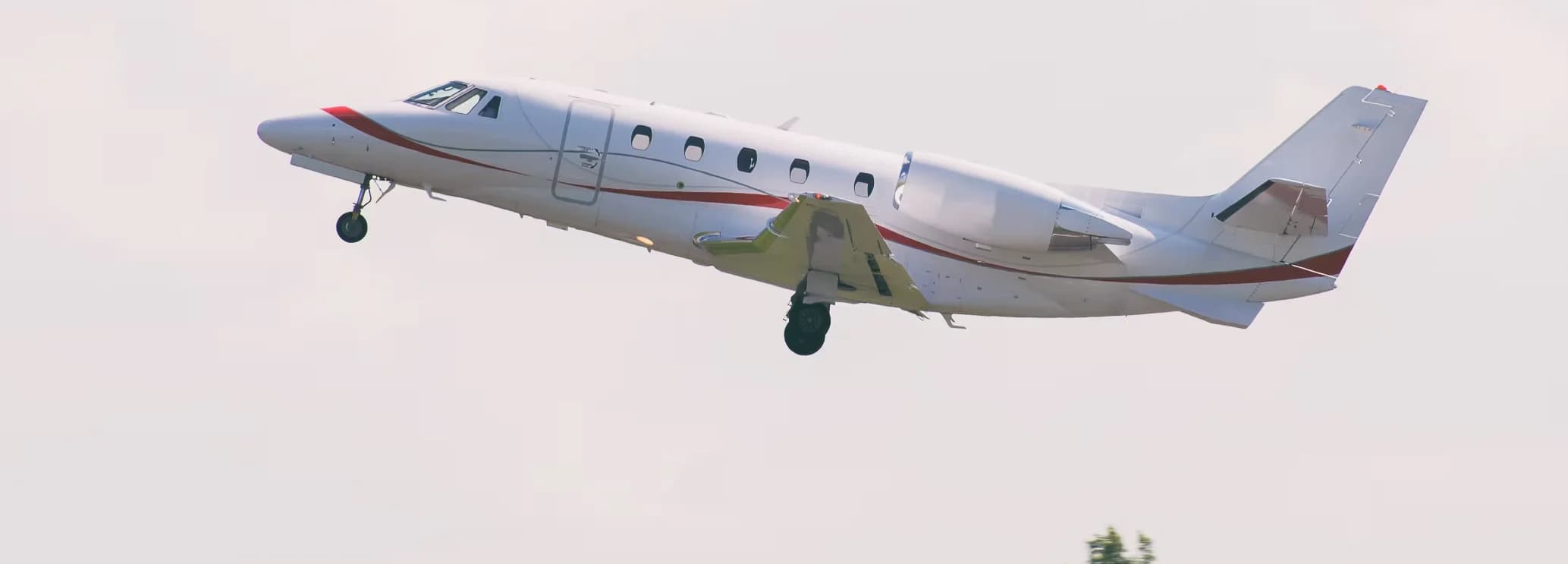
What Is a Repositioning Flight?
A repositioning flight is a flight segment in which an aircraft travels without paying passengers. It occurs when an aircraft needs to move from its current location to where the next revenue flight begins, or return to its home base after dropping off passengers. Repositioning is a structural feature of on-demand charter aviation, not an exception. Because aircraft do not sit in one place waiting, every revenue leg generates at least one associated positioning movement. This is the most significant factor behind the difference in total cost between two quotes for the same route.
When a broker or operator quotes your trip, the base price covers the revenue flight, which is the segment you actually fly as a passenger. Whether or not a repositioning fee appears on your invoice depends on where the quoted aircraft is based relative to your departure airport.
If the aircraft is based at or near your departure airport, no repositioning charge applies. The aircraft is already there.
If the closest available aircraft matching your requirements is based in a different city, the operator must fly it empty to reach you. That empty leg is the repositioning flight, and its cost is typically passed through to you as a positioning fee, also called a ferry fee.
Two quotes for the same route at the same hourly rate will produce different total costs if one aircraft is locally based and the other requires a two-hour repositioning leg. This is the primary reason why comparing charter quotes by headline hourly rate alone is consistently misleading. The hours being billed and the fees included or excluded tell the real story.
Repositioning is a structural feature of on-demand charter: approximately 40 percent of all private jet flights operate as repositioning legs, according to the NBAA 2026 Business Aviation Fact Book. An empty leg is a repositioning flight that an operator has offered for sale at a discounted rate, typically 25 to 75 percent below standard charter rates. The aircraft, crew, safety standards, and service are identical to a standard charter. The trade-offs are schedule rigidity (the client flies on the operator's timetable), route fixity, and elevated cancellation risk if the primary booking changes.
These terms are related but not interchangeable.
A repositioning flight is the underlying operational event: an aircraft flying without passengers to reach its next assignment or return to base. It is a structural necessity of the charter model, not a product offering.
An empty leg is a repositioning flight that an operator has chosen to offer for sale at a discounted rate. When an operator knows a repositioning flight will occur on a defined route and date, they may offer that segment to the market at 25 to 75 percent below the standard charter rate. The aircraft needs to make the flight regardless. Any revenue recovered from selling it offsets the positioning cost.
The practical difference from a client's perspective: a repositioning flight you pay for as a positioning fee is a cost on your invoice for moving the aircraft to serve your trip. An empty leg you book is a discounted flight where you travel as a passenger on someone else's aircraft repositioning between their bookings. One is a cost; the other is an opportunity.
According to the NBAA 2026 Business Aviation Fact Book, approximately 40 percent of all private jet flights operate as repositioning legs without paying passengers. This statistic reflects the structural economics of the charter model:
- One-way trips: When a client books a one-way flight from city A to city B, the aircraft either repositions back to its home base empty or moves forward to serve its next assignment from city B
- Base proximity mismatch: The distribution of aircraft is not uniform. High-demand markets like New York, South Florida, and Los Angeles have dense aircraft availability. Less-trafficked markets require repositioning from hub cities more often
- Charter booking patterns: Demand peaks around holidays and events create surges that require aircraft to move into high-demand zones from their standard bases, generating substantial repositioning traffic before and after peak periods
Aircraft availability, repositioning and peak-period demand can all affect when you should book; our private jet booking and planning guide covers these considerations.
This 40 percent figure represents both the cost burden that operators manage and the opportunity pool from which empty leg discounts emerge.
There are practical steps that reduce or eliminate positioning fees on most bookings:
Ask for locally based aircraft: When requesting a quote, ask whether the quoted aircraft is based at or near your departure airport. A broker should be able to tell you where the aircraft is based. If it requires repositioning, ask what the fee is and whether a different locally based aircraft in the same category would eliminate the fee.
Consider round trips: On trips where you depart city A, conduct business, and return to city A, a round-trip booking eliminates one repositioning leg entirely. The aircraft returns you to the departure city and is already home. One-way bookings typically generate repositioning costs in both directions.
Match timing to aircraft availability: Brokers with real-time fleet visibility can identify aircraft already positioned near your departure point. Flexibility of even a few hours in departure time can often shift the available match from a repositioning-required aircraft to a locally available one.
Consider empty legs: If your schedule is genuinely flexible, an empty leg on your required route offers the same aircraft and crew as a standard charter at 25 to 75 percent below standard rates. The trade-off is operating on the operator's fixed schedule and accepting cancellation risk if the primary booking changes.
Positioning fees on charter quotes represent the cost of flying an aircraft empty from its home base to the client's departure airport when no locally based aircraft is available in the required category. The fee is calculated at the aircraft's standard hourly rate applied to the empty positioning leg. Minimizing positioning costs requires asking the broker specifically whether the quoted aircraft is locally based, requesting alternatives for locally based aircraft in the same category, or structuring the trip as a round trip to eliminate the return positioning leg.
Empty legs are genuinely discounted. The aircraft and crew are identical to a standard charter. The regulatory requirements, safety standards, and service on board are identical. The discount exists because the operator needs to make the flight regardless, and any revenue recovered reduces the positioning cost.
What empty legs require from the client:
- Schedule flexibility: You fly on the operator's departure time and date, not your own
- Route acceptance: The route is fixed by the repositioning requirement, not your preference
- Cancellation tolerance: If the originating trip is cancelled or modified, the empty leg disappears. Cancellation rates for empty legs are meaningfully higher than for standard charters
- Short booking windows: Most empty legs become available one to four weeks before departure once the primary booking is confirmed. Same-week availability is common for well-matched routes
Empty legs work well for travelers with genuine schedule flexibility and a willingness to book closer to departure. They do not work for travelers who need certainty, specific departure times, or are planning around fixed commitments at the destination.
Hogani Jets coordinates each charter through licensed Part 135 operators.
Contact Hogani Jets at charter@hoganijets.com or +1-855-660-0573.
Reviewed by Matt Hogan — Founder, Hogani Jets & Aviation Specialist.
What is a repositioning flight in private aviation?
A repositioning flight is an aircraft traveling without paying passengers to reach the next revenue departure airport or return to home base. The cost may appear on your charter quote as a positioning or ferry fee when no locally based aircraft is available.
What is an empty leg flight?
An empty leg is a repositioning flight offered for sale at 25 to 75 percent below standard charter rates. The aircraft, crew, and safety standards are identical to a standard charter. The trade-off is a fixed route, date, and departure time set by the operator.
Why does my charter quote include a positioning fee?
A positioning fee appears when the closest available aircraft must travel empty to your departure airport. It is billed at the standard hourly rate for that empty leg. Ask your broker for a locally based aircraft to reduce or eliminate this cost entirely.
What percentage of private jet flights fly empty?
Approximately 40 percent of all private jet flights operate as repositioning legs without paying passengers, according to the NBAA 2026 Business Aviation Fact Book. This figure reflects one-way trip patterns, uneven aircraft distribution, and seasonal demand surges around holidays and events.
Can I book an empty leg on a private jet?
Yes. Empty legs are available through brokers, operators, and aggregator platforms at 25 to 75 percent below standard rates. Most become available one to four weeks before departure. You need schedule flexibility and must accept cancellation risk if the primary booking changes.
Are empty leg flights safe?
Yes. Empty leg flights operate under the same Part 135 certification, maintenance standards, and crew qualifications as standard charters. The discount reflects repositioning economics, not reduced safety. The only risks are commercial: potential cancellation and fixed departure times you cannot change.
What is the difference between a repositioning flight and an empty leg?
A repositioning flight is any aircraft movement without paying passengers. An empty leg is specifically a repositioning flight an operator has chosen to sell at a discount. All empty legs are repositioning flights, but not all repositioning flights are offered for sale.
How can I avoid paying a positioning fee on a charter quote?
Ask your broker whether the quoted aircraft is locally based at your departure airport. If not, request a locally based alternative in the same category. Booking a round trip also eliminates return positioning costs by keeping the aircraft at your home airport.
How far in advance do empty legs become available?
Most empty legs become available one to four weeks before the flight date, once the primary charter booking is confirmed and the repositioning need is known. Same-week availability is common on busy corridors. Searching months ahead produces few results as bookings are still being made.
Can an empty leg flight be cancelled?
Yes. If the primary charter that created the repositioning need is cancelled or rescheduled, the empty leg disappears. Cancellation rates for empty legs are meaningfully higher than for standard charters. Always confirm the cancellation policy and avoid making non-refundable travel plans around an empty leg booking.
Last Updated: 20 Sep 2026, 03:35 PM
About Us
Hogani Jets was built on a simple belief: real luxury is quiet, personal, and effortless. We work with a curated list of operators and a small client base so we can give every journey the attention it deserves.
Instant Charter Estimate


Compare Aircraft
Compare private jet categories side by side, range, cabin, passenger capacity, and hourly cost to find the right aircraft for your mission and route.
Your Guide: Hogani Jets Uncensored
Hogani Jets Uncensored: Submit your details for your free guide to private jet programs, honest truths, pricing and more.
