Weather Delays and Private Jet Charter: Rules & Rights
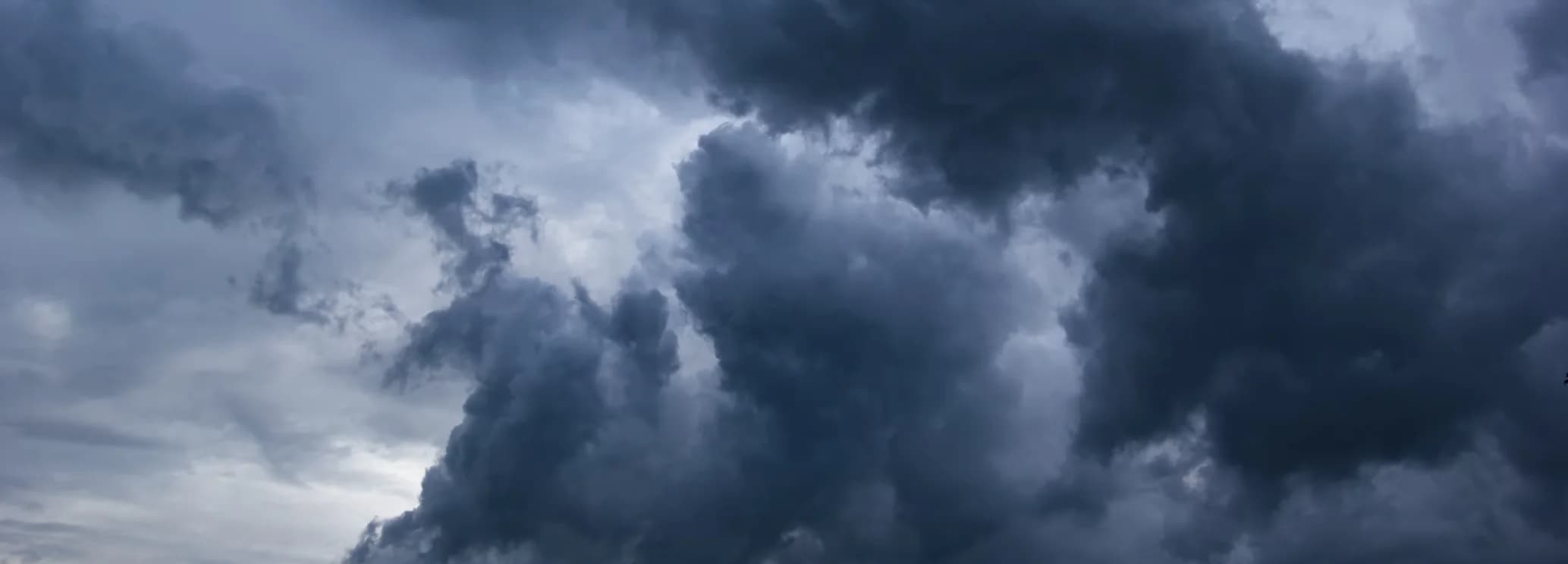
Private jets handle weather better than commercial aircraft in four ways: they fly above most weather at 41,000-51,000 feet, they can divert to alternate airports without cascading delays, they are not bound to hub-and-spoke schedules, and their departure times are flexible. When a charter is genuinely unsafe to operate due to weather, the operator is legally required to delay or cancel. In that event, most charter agreements apply a force majeure clause allowing rebooking or credit rather than a cash refund. De-icing adds $2,000-$5,000+ per event and is billed separately. Hogani Jets advises on weather risk and coordinates contingency plans for affected bookings.
Private aviation and commercial aviation experience weather differently at every stage of a flight.
Weather Situation | Commercial Aviation | Private Jet Charter |
|---|---|---|
Departure airport fog or low visibility | Delays cascade across hub; many flights affected simultaneously | One aircraft affected; flexible departure window accommodates delay |
En-route thunderstorms | Routing changes require ATC approval within congested commercial lanes | Private jets at FL430+ are often above weather; more routing flexibility |
Destination airport closure | Divert to nearest commercial alternate; may not have connecting options | Divert to the nearest suitable airport; ground transport coordinated |
Winter storm at departure | De-icing queues for dozens of aircraft; delays multiply | Single aircraft; de-iced quickly; departs as soon as conditions allow |
Strong headwinds | Fixed schedules; no ability to adjust for winds | Departure time adjusted to optimize for favorable winds |
The most significant private jet weather advantage is altitude. Commercial narrow-body aircraft cruise at 31,000-39,000 feet, within most weather systems. Private heavy and ultra-long-range jets cruise at 43,000-51,000 feet, above the vast majority of convective weather. Passengers on private jets at FL450+ experience genuinely smoother rides than the same passengers would on a commercial aircraft in the same weather system.
Five weather conditions create genuine operational delays even for private aviation.
1. Ground Icing: Freezing Rain, Sleet, or Heavy Snow
Any precipitation at or near freezing temperatures requires de-icing before departure. Aircraft cannot depart with ice on wings or control surfaces regardless of pilot preference or client urgency. De-icing adds 30-90 minutes to departure and $2,000-$5,000+ per application. In heavy icing conditions, multiple applications may be required.
2. Low Visibility at Departure or Destination
Aircraft can fly in low visibility using instrument approaches (ILS, RNAV) down to approximately 300 feet above the ground. Below published minimums (which vary by aircraft and airport), the approach cannot be continued. If destination visibility is below minimums, the flight diverts to an alternate. Low visibility at departure delays taxi and takeoff until visibility improves to required minimums.
3. Thunderstorm Cells at Departure or on Route
Pilots deviate around thunderstorm cells. This adds flight time and fuel burn. In some cases, departure is delayed until a storm cell clears a departure path. En-route thunderstorms are almost always circumnavigated rather than penetrated. Jets at FL430+ fly over most standard convective weather but cannot fly over the tallest thunderstorms (40,000-50,000 ft tops in severe cases).
4. High Winds at Destination
Most airports have published crosswind limits for landing. When surface winds exceed these limits, aircraft cannot land. Airports with single runways are more vulnerable to crosswind closure than airports with multiple runways in different orientations. Mountain airports (KASE, KEGE) are particularly wind-sensitive.
5. Airport Closure or TFR (Temporary Flight Restriction)
Airports occasionally close for runway maintenance, snow removal, or emergency operations. TFRs are airspace restrictions typically related to major events, VIP travel (Air Force One), or security incidents. These are outside weather but cause similar delays and diversions.
Because closures and TFRs can develop with little notice, traveling smarter means planning with some flexibility and knowing the best alternate airports before the trip begins.
Cost allocation during weather delays depends on the cause and the specific charter agreement terms.
Scenario | Who Bears the Cost | Notes |
|---|---|---|
De-icing required at departure | Client | Weather-related variable cost; billed at actual cost |
Departure delayed 1-3 hours by weather | No additional charge | Crew remains on duty; no additional billing within normal duty day |
Extended delay creating crew overtime | Client | Crew duty time limits apply; overtime billing at prorated rate |
Diversion to alternate airport | Client | Additional landing fees and ground handling at alternate |
Flight cancelled by operator for safety | No costs incurred; client may rebook | Force majeure clause applies; see below |
Client cancels due to weather concern | Standard cancellation policy applies | Weather concern by client is not force majeure; normal terms apply |
Airport closure (government action) | Force majeure; rebook or credit | Confirmed closure outside operator and client control |
The most important distinction: if the operator cancels because flying is genuinely unsafe or impossible, the force majeure clause applies. If the client cancels because they are concerned about weather (but the operator believes the flight is safe and legal), standard cancellation terms apply.
Force majeure (French: superior force) is a standard clause in charter agreements that addresses extraordinary events outside either party's control. Weather, airspace closure, government restrictions, and natural disasters typically fall under force majeure.
When force majeure applies, the typical remedy is:
- Full credit of paid amounts toward a future booking (most common)
- Rescheduling to an alternative date at no penalty
- Cash refund minus any prior incurred expenses. (Pre organized ground transportation, etc)
- No penalty for either party for the delay or cancellation
Force majeure does NOT apply when: the weather is uncomfortable but legal to fly through; the client simply prefers not to fly in rough conditions; or the delay is due to poor planning rather than extraordinary conditions.
Always read the force majeure clause before signing a charter agreement. The specific definition of qualifying events and the remedies available vary by operator and agreement.
FAA regulations under 14 CFR Part 135 impose mandatory rest requirements on charter crew. These rules protect safety but can create scheduling constraints during weather delays.
Rule | Requirement | Impact on Delays |
|---|---|---|
Maximum daily flight time | 8 hours flight time per 24-hour period | If weather delay extends duty, flight may be postponed to next day |
Minimum rest period | 10 hours between duty periods (9 consecutive hours of rest) | Crew that reaches duty limits cannot fly until rested |
Maximum duty period | 14 hours from first duty assignment | Weather delays early in the day compress available flying window |
Augmented crew option | Second crew allows extended operations | Some VIP airliner operators carry spare crew for long delays |
A practical example: a crew reports for a 9 AM departure that is delayed 5 hours by a snowstorm. They are now available to depart at 2 PM. If the flight takes 7 hours, they land at 9 PM and have been on duty since early morning. If the total duty day exceeds 14 hours, the crew legally cannot fly, and the departure moves to the following day after a full rest period.
Hogani Jets coordinates with operators to identify duty time exposure on weather-delayed charters and arranges augmented crews or alternative aircraft where delay risk is significant.
A diversion occurs when an aircraft cannot land at the planned destination and must proceed to an alternate airport. In private aviation, diversions are handled differently from commercial aviation.
- The pilot declares the diversion to ATC and proceeds to the filed alternate airport.
- Hogani Jets is notified immediately and contacts the client with the alternate airport and estimated arrival time.
- FBO ground handling is arranged at the alternate airport by the operator.
- Ground transportation from the alternate airport to the original destination is coordinated.
- Additional landing fees and handling charges at the alternate airport may be billed to the client.
- If a return flight is needed (from the alternate back to the original destination after conditions clear), Hogani Jets arranges accordingly.
Diversions from New York to London transatlantic charters typically use Shannon (EINN) or Iceland (BIRK or BIKF) as alternates. Los Angeles to Asia Pacific diversions typically use Anchorage (PANC). Hogani Jets files alternates for every international charter as standard procedure.
Six strategies reduce the impact of weather on private charter missions.
1. Build Departure Flexibility Into the Plan
Clients who can depart within a 4-hour window have significantly more weather flexibility than clients with a fixed departure minute. A 2 PM departure committed to 1:55 PM wheels-up has no room for a 90-minute de-icing cycle. A 2 PM departure with a 4-hour window means departure by 6 PM is acceptable.
2. Choose Higher-Ceiling Aircraft for Long Missions
Ultra-long-range jets at FL450-FL510 fly above most weather systems that affect commercial and smaller private aircraft at FL350-FL390. The altitude premium comes with a rate premium, but on a 10-hour mission in uncertain weather, the smooth ride and reduced routing deviation save time and passenger wellbeing.
3. Monitor Weather 72-96 Hours Out and Have a Contingency Airport
Hogani Jets provides weather briefings for upcoming charters. If a destination airport shows forecast closure risk, identifying an alternate departure time or alternate destination 72-96 hours out allows better planning than last-minute scrambling.
4. Consider International Alternates on Every Transatlantic Charter
Hogani Jets international charters are reviewed with approved alternates as standard procedure. Clients do not need to request this; it is part of every international booking.
5. Avoid Committing Ground Connections to the Minute
Clients who book trains, hotel check-ins, or private events starting within 90 minutes of scheduled arrival create maximum weather exposure. A 2-hour buffer between flight arrival and next commitment accommodates most weather-related arrival variability.
6. Use Winter-Capable Aircraft for Ski Resort Destinations
Aspen (KASE), Jackson Hole (KJAC), and similar mountain airports see winter weather that affects all aircraft. Operators with specific mountain airport experience and aircraft certified for high-altitude winter operations are the appropriate choice for these destinations. Hogani Jets confirms operator experience at mountain destinations before booking.
Hogani Jets coordinates each charter through licensed Part 135 operators.
Contact Hogani Jets at charter@hoganijets.com or +1-855-660-0573.
Reviewed by Matt Hogan — Founder, Hogani Jets & Aviation Specialist.
Can private jets fly in bad weather?
Yes, private jets safely fly in rain, clouds, and moderate turbulence. However, strict safety regulations prohibit private jets from flying through severe thunderstorms, departing with ice on the wings, or landing when ground visibility drops below published minimums.
What happens if my private jet charter is cancelled due to weather?
If an operator cancels your private jet charter due to unsafe weather, standard force majeure clauses apply. You typically receive full credit to reschedule without penalty. However, canceling yourself preemptively while the operator deems conditions safe triggers financial penalties.
Do private jets get delayed by weather as much as commercial flights?
No, private jets experience significantly fewer weather delays than commercial flights. Private jets cruise above weather at 41,000 feet, utilize flexible departure windows to dodge storms, and avoid the cascading gridlock that plagues commercial airline hub-and-spoke networks.
Who pays for de-icing on a private jet charter?
The charter client always pays for private jet de-icing. Billed post-flight as a variable cost, Type I de-icing for light frost costs $1,000 to $2,500. Type IV anti-icing for heavy snow ranges from $2,000 to $5,000 per application.
What is a force majeure clause in a charter agreement?
A force majeure clause protects both parties during uncontrollable events like severe weather, natural disasters, or airspace closures. Under force majeure, standard private jet charter cancellation penalties are usually waived, allowing clients to receive credit or reschedule without loss.
Do private jets have to follow crew rest rules?
Yes, private jet pilots must follow strict FAA Part 135 or Part 121 crew rest regulations. If severe weather delays push pilots past their 14-hour daily duty limit, the flight is legally grounded for a mandatory 10-hour crew rest period.
What if my private jet diverts due to weather?
If weather forces your private jet charter to divert, the aircraft lands at a safe alternate airport. The client remains financially responsible for the additional flight hours, secondary landing fees, and ground transportation costs required to reach the final destination.
Can ATC weather delays affect my private jet charter?
Yes, Air Traffic Control (ATC) ground stops affect private jets equally. Even if your departure airport is sunny, severe weather at your destination or along your flight path can trigger mandatory FAA ground stops, delaying your private jet charter indefinitely.
Do I get a refund if the weather cuts my private jet flight short?
No, you do not receive a refund if weather forces your private jet to divert mid-flight. Because the operator still incurred the fuel, crew, and operational costs, you are billed for the actual flight time flown, plus any diversion expenses.
Is Hogani Jets a direct air carrier?
No. Hogani Jets is an air charter broker and does not own or operate aircraft. All charters are coordinated through FAA Part 135 certificated direct air carriers who hold full operational control. The pilot in command has sole authority over all flight safety decisions, including weather-related delays, diversions, and cancellations.
Last Updated: 14 Sep 2026, 12:46 PM
About Us
Hogani Jets was built on a simple belief: real luxury is quiet, personal, and effortless. We work with a curated list of operators and a small client base so we can give every journey the attention it deserves.
Instant Charter Estimate


Compare Aircraft
Compare private jet categories side by side, range, cabin, passenger capacity, and hourly cost to find the right aircraft for your mission and route.
Your Guide: Hogani Jets Uncensored
Hogani Jets Uncensored: Submit your details for your free guide to private jet programs, honest truths, pricing and more.
