Private Jet Etiquette: What You Need to Know
Private jet charter operations feature no mandatory dress code and significantly less rigid formality than commercial first class. The core rules that matter include arriving within your scheduled window, respecting the absolute authority of the Captain, avoiding smoking anywhere on or near the aircraft, moderating alcohol consumption, and providing advance notice for any itinerary adjustments. Beyond critical safety mandates, private cabin etiquette relies primarily on common courtesy among your traveling party. Hogani Jets guides first-time flyers through every operational detail.
Private aviation is less formal than most first-time clients expect. There is no check-in agent assessing your appearance, no boarding announcement, and no shared armrest to negotiate. What etiquette exists is practical rather than ceremonial. Most of it applies to how you treat the crew, your fellow passengers, and the aircraft itself.
The Jet Waits for You, Within Reason
One of the genuine advantages of private charter is that the aircraft holds at the FBO for you. If you are 10 minutes late, the crew waits. If you are 20 minutes late, they will call to confirm your status. You do not miss a private charter the way you miss a commercial flight.
That said, the aircraft waiting is a courtesy that works best when it is not abused. A group that routinely departs 45 minutes past the scheduled time affects the crew's duty day, the FBO's scheduling, and, on multi-leg itineraries, can compress the timeline for subsequent legs. Arrive within 15 minutes of the agreed time. If circumstances make you significantly late, call Hogani Jets as early as possible so the crew and FBO can plan accordingly.
Informing Your Broker of Changes
Schedule changes happen. A meeting runs long, a connection delays a passenger, a client dinner extends. The right approach is early communication. Contact Hogani Jets as soon as a delay or change becomes apparent. A 2-hour delay communicated 3 hours before departure is manageable. A 2-hour delay communicated at the scheduled departure time is disruptive for the crew, the FBO, and potentially for subsequent flights on the same aircraft.
For cancellations, refer to the operator's cancellation policy confirmed at booking. Most Part 135 charter contracts include specific notice periods for cancellation without penalty. Last-minute cancellations within 24 to 48 hours of departure typically forfeit a percentage of the charter fee.
There is no dress code on a private jet. Business attire, smart casual, sportswear, and comfortable travel clothes are all equally acceptable. The aircraft is your private space, and there is no dress standard imposed by the operator, the FBO, or Hogani Jets.
For FBO lounges at major aviation hubs, the environment is business-oriented. Guests in swimwear or wet clothing from a beach or pool visit are generally expected to change before entering the FBO lobby. This is a courtesy to other FBO clients and staff rather than a formal rule.
Shoes are a common question. There is no requirement to remove shoes on a private jet. Some passengers remove shoes for comfort on longer flights. If the aircraft has plush carpeting or lighter interior upholstery, removing heavy or dirty footwear before boarding is a considerate practice. Some aircraft interiors carry specific operator notes about footwear, which Hogani Jets relays at booking if relevant.
The Captain
The Captain is a professional with absolute authority over the aircraft. Brief, respectful communication is appropriate. Address safety or operational questions to the Captain directly. Do not enter the cockpit without an explicit invitation. Do not argue with a Captain's decision on any matter related to the safety or conduct of the flight.
For routine requests during the flight, approach the Captain during the stable cruise phase rather than during departure, approach, or any period of concentrated flight crew activity.
The First Officer
The First Officer is occupied with flight duties alongside the Captain. The same courtesies apply as with the Captain. If the aircraft has a flight attendant, direct service requests to the flight attendant rather than the flight crew.
The Flight Attendant
Where a flight attendant is present, they manage all cabin service requests. Communicate catering preferences, temperature requests, and any passenger needs through the flight attendant. Treat the flight attendant as you would any hospitality professional in a high-level service environment.
One: arrive on time or communicate changes early. Two: do not smoke on or near the aircraft at any stage. Three: respect the Captain's authority without negotiation. Four: moderate alcohol consumption: the crew will manage service and can stop it. Five: treat the aircraft interior with care. Everything else on private jet etiquette resolves itself through common courtesy. The formal rules are few. The informal ones are the same as in any professional, shared space.
Smoking is prohibited on all private jet charter flights, including all Part 135 on-demand aircraft. This includes cigarettes, cigars, pipes, e-cigarettes, and vaping devices. Violating the no-smoking rule is a federal offense under 49 CFR Part 252 and can result in civil penalties.
The no-smoking rule applies from the moment the aircraft door closes. Smoking is also typically prohibited within the FBO terminal and within a specified distance of the aircraft on the ramp. If you require a smoke before departure, do so before arriving at the FBO.
Alcohol service is standard on most equipped private jets. The crew manages service throughout the flight. There is no preset number of drinks and no automated cutoff. The flight attendant or Captain will use professional judgment to manage service.
The Captain has the authority to deny or terminate alcohol service at any point under FAA regulations. In practice, this authority is almost never exercised. Drinking responsibly in a private aircraft means being a good guest in a shared space where the crew cannot easily separate themselves from the environment.
For celebration flights (birthday charters, bachelorette parties, wedding departures), discuss the catering and alcohol plan with Hogani Jets at booking. The crew is prepared for a celebratory environment and coordinates accordingly.
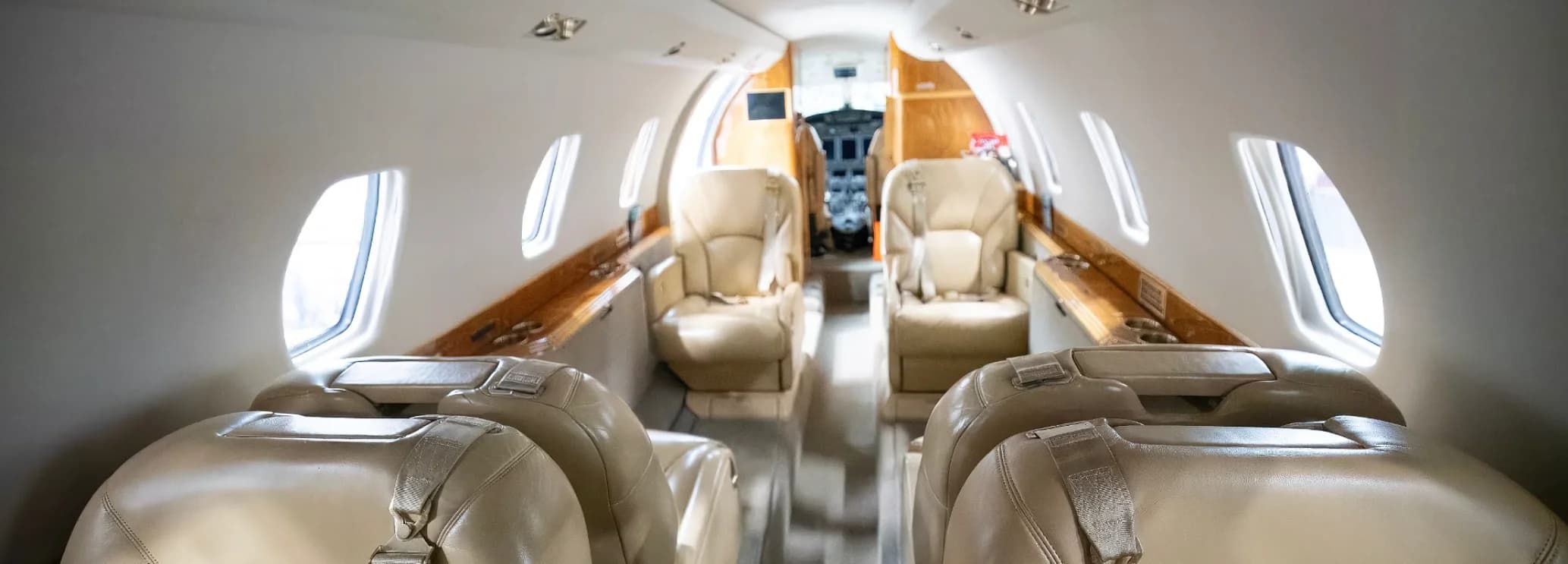
Private jets are small. A midsize jet seating 8 passengers has a cabin roughly the size of a large SUV interior. Phone calls at full volume affect everyone in the cabin. Business calls, video conferences, and loud conversations are the primary sources of cabin friction on group charters.
For work-critical calls, use headphones. Inform fellow passengers before taking an extended call. For social charters where the group is the same party, cabin noise is a shared decision. For mixed-purpose flights where some passengers are working and others are socializing, align expectations before boarding.
Photography of the aircraft interior, the exterior, and the departure experience is common and welcomed. Photography of other passengers, however, requires their explicit consent. This is common courtesy in any private setting and particularly important where confidentiality or security is a consideration for other passengers on the flight.
Photographing the cockpit or flight crew requires the crew's permission. Most crew are comfortable with a brief cockpit photo on the ground before departure. Do not photograph instrument panels or operational displays while the aircraft is in motion.
The passenger manifest is filed before departure. If the number of passengers changes, notify Hogani Jets immediately. Adding passengers affects weight and balance calculations, catering quantities, seat configuration, and potentially the operating certificate conditions of the flight. Bringing additional guests without advance notice is disruptive to the operator and is not acceptable practice.
Passenger names for international flights must be on the manifest before departure for APIS submission. Last-minute name changes on international charters require operator coordination and may not always be accommodated within the APIS filing window.
Children are welcome on private jet charters and travel the same way adults do, with no screening or boarding formalities. Infants require an approved child restraint system for takeoff and landing on most Part 135 operations, the same as commercial aviation. Confirm car seat requirements with Hogani Jets at booking.
Private jet cabins are small, and there are no other passengers to avoid. If a young child is distressed during the flight, the sound is close-quarters for the crew and for any adult passengers. For long flights with young children, discuss cabin comfort planning with Hogani Jets when booking.
Pets are common on private jet charters. Dogs and cats travel in the cabin, not in the hold. Most operators permit pets with advance notice. Inform Hogani Jets of any pet at booking so the operator can confirm their pet policy and prepare the cabin accordingly.
For international travel with pets, health documentation and destination country entry requirements apply. See the International Private Jet Travel guide for pet documentation requirements by region.
The aircraft is the operator's asset. Minor care of the interior is appropriate. Do not place wet items directly on leather seating without a towel. Heavy footwear on light-coloured upholstery leaves marks. Food spills happen and are cleaned by the operator, but flagging a spill to the crew rather than leaving it unmentioned is appropriate.
Do not remove aircraft emergency equipment from its placarded location. Do not tamper with aircraft systems, switches, or controls.
First-time private jet clients often expect more formality than exists. There is no boarding announcement, no safety video on a screen, no steward handing out menus. The safety briefing is delivered by the crew verbally before departure. Catering is already loaded. You board, find your seat, and the departure follows. The experience is closer to a well-staffed private car than to a premium airline. Relax, communicate your preferences directly to the crew, and let the service come to you.
For questions about any aspect of the private jet experience before your first charter, contact Hogani Jets at charter@hoganijets.com or +1-855-660-0573.
All charters are facilitated through licensed Part 135 direct air carriers who hold full operational control and regulatory compliance for every flight.
Reviewed by Matt Hogan — Founder, Hogani Jets & Aviation Specialist.
Is there a dress code on a private jet?
No universal dress code exists for private jet travel. Passengers can wear business attire, smart casual, or comfortable leisure wear. Avoid footwear or clothing that could damage cabin interiors.
Can you smoke on a private jet?
No. Smoking, vaping, and e-cigarettes are strictly prohibited on all Part 135 charter flights under federal regulations. This ban applies from door closure through arrival across the entire aircraft.
How late can I be for a private jet departure?
While private jets offer schedule flexibility, significant delays disrupt air traffic slots and crew duty limits. Arrive 15 to 30 minutes early, and notify Hogani Jets immediately of any transit delays.
Can I make phone calls on a private jet?
Yes. Phone calls are permitted in the cabin. On equipped aircraft, satellite Wi-Fi supports voice and video calls. Use headphones and maintain a moderate voice volume as a courtesy to others.
Can I bring a pet on a private jet?
Yes, on most aircraft with advance notice. Pets travel inside the cabin rather than the cargo hold. Inform Hogani Jets at booking to confirm operator pet policies and documentation requirements.
Can I take photographs on a private jet?
Yes, capturing cabin memories is common. Always obtain permission before photographing crew members or other passengers. Never photograph active instrument panels or flight deck controls during flight or taxi operations.
Can I bring extra guests to the aircraft on departure day?
No. Passenger manifests must be finalized prior to departure for weight limits and customs compliance. Any guest additions require advance notice through Hogani Jets to update official filings.
What should I do if I need to cancel or change my charter?
Contact Hogani Jets as early as possible. Part 135 contracts specify notice periods for modifications, and last-minute changes within 24 to 48 hours can incur cancellation fees or forfeiture percentages.
Do children need car seats on a private jet?
Infants and toddlers typically require an approved child restraint system for takeoff and landing under Part 135 rules. Confirm specific car seat compatibility and requirements with Hogani Jets at booking.
Should I tip the crew?
Tipping is customary but optional. Standard domestic tips range from $50 to $100 per pilot per flight leg, and $100 to $250 for flight attendants, handed in cash upon trip completion.
Who chooses seating on a private jet?
The lead passenger or charter host always boards first and selects their preferred seating. Other travelers then occupy the remaining cabin seats as directed or according to group familiarity.
What luggage guidelines apply to private jet travel?
Private jets have finite cargo space depending on the aircraft category. Use soft-sided luggage or duffel bags rather than rigid hard-shell suitcases to optimize storage efficiency in smaller compartments.
About Us
Hogani Jets was built on a simple belief: real luxury is quiet, personal, and effortless. We work with a curated list of operators and a small client base so we can give every journey the attention it deserves.
Instant Charter Estimate

Compare Aircraft
Compare private jet categories side by side, range, cabin, passenger capacity, and hourly cost to find the right aircraft for your mission and route.
Your Guide: Hogani Jets Uncensored
Hogani Jets Uncensored: Submit your details for your free guide to private jet programs, honest truths, pricing and more.
