Private Jet Security: What Actually Happens at the FBO
Private jet passengers do not pass through commercial Transportation Security Administration checkpoints, body scanners, or baggage X-ray machines. There is no shoe removal, no liquid restriction, and no electronics rule. Security on a private jet charter is managed at the manifest level where the licensed operator verifies passenger identity against the filed passenger manifest before departure. Fixed Base Operator ramp access is controlled, but passenger screening is entirely different from commercial aviation. Hogani Jets ensures all regulatory protocols are seamlessly handled.
The most common question from first-time private jet clients is whether they need to go through airport security. The short answer is no, not in the commercial aviation sense. The longer answer explains what does happen, what regulations govern private aviation security, and where the rules are different from what most travelers expect.
No TSA checkpoint. Private jet passengers do not queue at a Transportation Security Administration screening lane. There is no conveyor belt, no body scanner, and no separate queue for PreCheck or Global Entry holders.
No liquid restriction. The TSA 3-1-1 rule (liquids in containers of 100ml or less, in a single quart-sized bag) applies to commercial aviation checkpoints. It does not apply to private jet departures. Full-size toiletry bottles, beverages, and any other liquids travel without restriction.
No shoe removal. Passengers do not remove shoes, belts, jackets, or any other clothing items before boarding a private jet.
No laptop removal. Electronics remain in bags and cases. Nothing is required to be placed in a separate tray for screening.
No random secondary screening. Commercial aviation uses randomized additional screening on a subset of passengers. This process does not apply to private jet departures.
At most US FBOs, this is the security process for a private jet departure: you arrive by vehicle, a ground handler or FBO staff member confirms your name against the passenger manifest, you enter the FBO lounge or proceed directly to the aircraft, and you board. That is it. The manifest-based check is the primary security mechanism. The operator filed the manifest with the crew's identity documents and passenger details before departure. You are expected, your identity is confirmed, and you board.
The Twelve-Five Standard Security Program
Part 135 on-demand charter operators flying aircraft with a maximum takeoff weight over 12,500 pounds are required to follow the TSA Twelve-Five Standard Security Program (TFSSP). This program requires operators to verify passenger identity before boarding, maintain a passenger manifest, deny boarding to individuals on the No Fly List, and report security threats.
The verification process is the operator confirming that the name on your government-issued ID matches the name on the manifest. It is not a screening checkpoint. It takes seconds.
The Private Charter Standard Security Program
For aircraft under 12,500 pounds (turboprops, very light jets, and some light jets), the TSA Private Charter Standard Security Program applies. Requirements are similar in structure but lighter in scope. Passenger identity verification against a manifest remains the core requirement.
What the Operator Is Required to Do
Before every charter departure, the operator must: verify that no passenger is on the No Fly List or the Selectee List, confirm passenger identity against a government-issued ID, and file a manifest with passenger details. The operator is responsible for these checks. The passenger presents ID and the operator completes the process.
No Fly List Checks
The No Fly List check is the most significant security measure that does apply to private aviation. The TSA Secure Flight program requires operators to check passenger names against government watchlists before departure. This check is completed during the booking process when passenger names are submitted. It is invisible to the passenger and does not involve any additional action at the FBO.
The absence of a TSA checkpoint does not mean anything goes. Federal aviation regulations and FAA dangerous goods rules still apply. The following are prohibited on Part 135 charter flights regardless of aircraft type or departure location.
| Prohibited Item | Reason | Notes |
| Firearms (unsecured) | FAA regulations | Firearms must be declared, unloaded, in a locked hard case, and stowed in the baggage hold. Varies by route and destination. |
| Explosive devices | FAA/federal law | Any explosive material is absolutely prohibited. |
| Flammable liquids and gases (quantity) | IATA Dangerous Goods | Small quantities of personal care aerosols permitted. Large quantities of flammable materials are DG-regulated. |
| Lithium battery banks (large) | FAA DG regulations | Lithium batteries over 100Wh require operator approval. Over 160Wh are prohibited in checked baggage. |
| Cannabis (federal law) | Federal jurisdiction | Cannabis is federally illegal regardless of state law. FBOs and aircraft operate under federal jurisdiction. |
| Stowaways | Federal law | Unauthorized passengers are a federal offense. The manifest must reflect all individuals on board. |
Items that are restricted or prohibited under IATA Dangerous Goods regulations (compressed gases, corrosives, radioactive materials, certain chemicals) are equally restricted on private jets. The absence of a passenger security checkpoint does not change the dangerous goods rules that govern all aircraft operations.
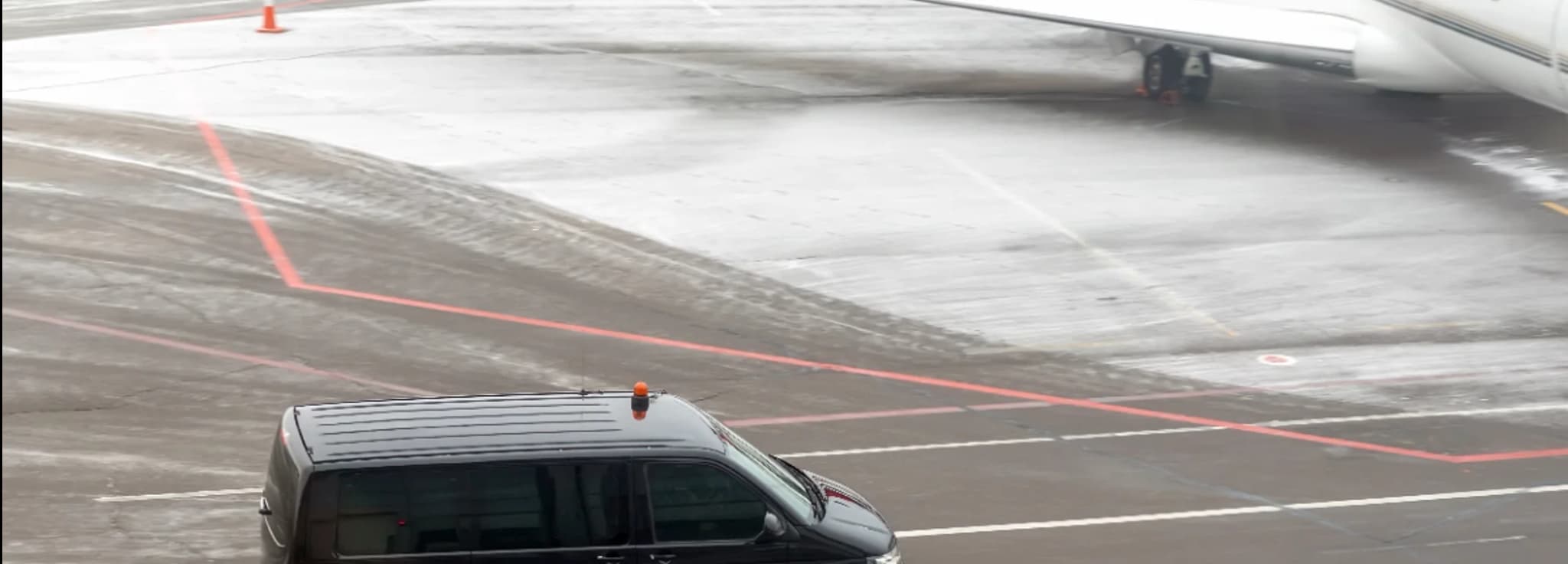
While passengers do not pass through a security screening checkpoint, the FBO and its ramp are not open to the public. FBO ramp access is controlled by keycard, badge access, and, in some cases, security personnel at the gate.
Vehicles that are authorized to access the ramp (ground transport, fuel trucks, catering vehicles) are badged and controlled. Unauthorized individuals cannot walk onto the ramp. The security is perimeter-focused rather than passenger-focused.
At major commercial airports where the FBO shares infrastructure with commercial aviation (such as at large international airports), additional security coordination with the airport authority may apply. At dedicated general aviation airports like KTEB Teterboro or KSDL Scottsdale, the entire facility is private aviation, and ramp access is the primary security control.
US Departures
For international departures from the US, CBP is notified of the flight through APIS submission at a minimum of 60 minutes before departure. CBP may or may not be present at the FBO for departure inspection. For most Caribbean and Mexico departures, CBP clears the outbound flight electronically without a physical inspection.
US Returns from International Destinations
On returning to the US from an international destination, Customs and Border Protection processes the aircraft at the FBO. CBP officers conduct a document check, review the customs declaration forms, and may conduct an inspection of the aircraft or baggage. This occurs at the FBO, not at a commercial terminal.
The process typically takes 15 to 30 minutes. Passengers remain at the FBO or aircraft until CBP clears the flight. The experience is fundamentally different from commercial customs: there is no queue, no baggage carousel to wait for, and no shared processing hall.
Global Entry for Private Jet Arrivals
Global Entry membership does not provide an express lane at an FBO customs inspection. CBP processes the entire aircraft manifest together. Global Entry is most valuable for commercial international arrivals where it bypasses the primary inspection queue. At a private FBO, the entire group is processed as one manifest regardless of individual Global Entry status.
Customs and Border Protection processes private jet international arrivals at the FBO, not at a commercial terminal. There is no shared processing hall and no queue. CBP officers review the passenger manifest, check passports, and process customs declarations for the entire aircraft together. The process typically takes 15 to 30 minutes. Passengers are cleared at the FBO and depart directly to ground transport. No baggage carousel, no secondary hall.
When departing an international destination to return to the US, the foreign country's customs or immigration authority processes the departure at the private aviation terminal. Requirements vary by country. Most major private jet hubs (Nassau, Providenciales, Cancun, Geneva, London Luton) have dedicated private aviation customs facilities with minimal wait times.
Some destinations require airport departure taxes paid at departure. The operator or handling agent at the destination FBO manages this as part of trip handling. Hogani Jets coordinates handling requirements for all destinations at the booking stage.
Private jet charter provides inherent discretion advantages over commercial aviation: no public manifest, no shared terminal, and departure from a facility with controlled ramp access. For clients with specific security requirements, additional measures can be arranged.
Advance security sweeps of the FBO and aircraft are available through specialist aviation security firms. Secure ground transport coordination, counter-surveillance at FBO arrival points, and discreet manifest handling are all available. Hogani Jets coordinates with specialist security providers for clients with elevated requirements.
For any questions about security procedures on a specific charter, contact Hogani Jets at charter@hoganijets.com or +1-855-660-0573. All charters are facilitated through licensed Part 135 direct air carriers who hold full operational control and regulatory compliance for every flight.
Reviewed by Matt Hogan — Founder, Hogani Jets & Aviation Specialist.
Do you go through security on a private jet?
Private jet travel bypasses commercial TSA checkpoints entirely. There are no body scanners or liquid restrictions. Operators verify your identity against the filed passenger manifest in seconds.
Do private jet passengers have to remove shoes?
No. Private jet passengers never remove shoes, belts, jackets, or clothing items. FBO departures do not feature commercial security screening lanes or baggage X ray machines.
Can I bring liquids on a private jet?
Yes, without restriction. Commercial liquid rules do not apply. Full-size toiletries, beverages, and other liquids travel freely with no volume limits or clear bag requirements.
What is the No Fly List check on a private jet?
Operators verify all passengers against government watchlists under the TSA Secure Flight program during booking. This verification happens invisibly behind the scenes requiring no passenger action.
Can I bring a firearm on a private jet?
Yes, under strict conditions. Firearms must be declared, unloaded, secured in a locked hard case, and placed in the baggage hold. International rules vary by destination.
Can I bring cannabis on a private jet?
No. Cannabis remains federally illegal. FBOs and aircraft operate under federal jurisdiction, making possession on any Part 135 charter flight a federal offense regardless of state laws.
What happens at customs when arriving back in the US by private jet?
Customs and Border Protection officers process the aircraft directly at the FBO. Passengers present passports and customs declarations, completing the process in 15 to 30 minutes.
Does Global Entry help at a private jet FBO customs arrival?
No. CBP processes the entire aircraft manifest together at the private FBO. Global Entry does not provide an express lane in private terminals as the group clears collectively.
What is the Twelve-Five Security Program for private jets?
The TSA Twelve-Five Standard Security Program governs Part 135 operators flying aircraft over 12,500 pounds, requiring manifest identity checks and watchlist screening without passenger checkpoints.
Can someone come to the FBO to watch a private jet departure?
No. FBO ramps are restricted zones controlled by badges and keycards. Unauthorized individuals and vehicles cannot access the tarmac, securing the aircraft from outside entry.
About Us
Hogani Jets was built on a simple belief: real luxury is quiet, personal, and effortless. We work with a curated list of operators and a small client base so we can give every journey the attention it deserves.
Instant Charter Estimate


Compare Aircraft
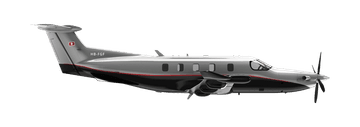
Compare private jet categories side by side, range, cabin, passenger capacity, and hourly cost to find the right aircraft for your mission and route.
Your Guide: Hogani Jets Uncensored
Hogani Jets Uncensored: Submit your details for your free guide to private jet programs, honest truths, pricing and more.
