Artwork & Courier on One Jet: Museum-Grade Fine Art Transport
Fine art transport by private jet costs $1,100 to $20,000 per flight hour, depending on aircraft size. The crated artwork and its courier fly together on one dedicated aircraft, direct from lender to venue. Loading happens ramp-side at the FBO, with no cargo terminal handling or shared freight. Hogani Jets matches the aircraft to crate size, payload, and customs needs through licensed Part 135 operators.
Most artwork moves on scheduled air freight, packed and escorted by a specialist fine art shipper. That route works well for routine loans and sales. A dedicated charter makes sense when the standard route adds risk, delay, or exposure the lender will not accept.
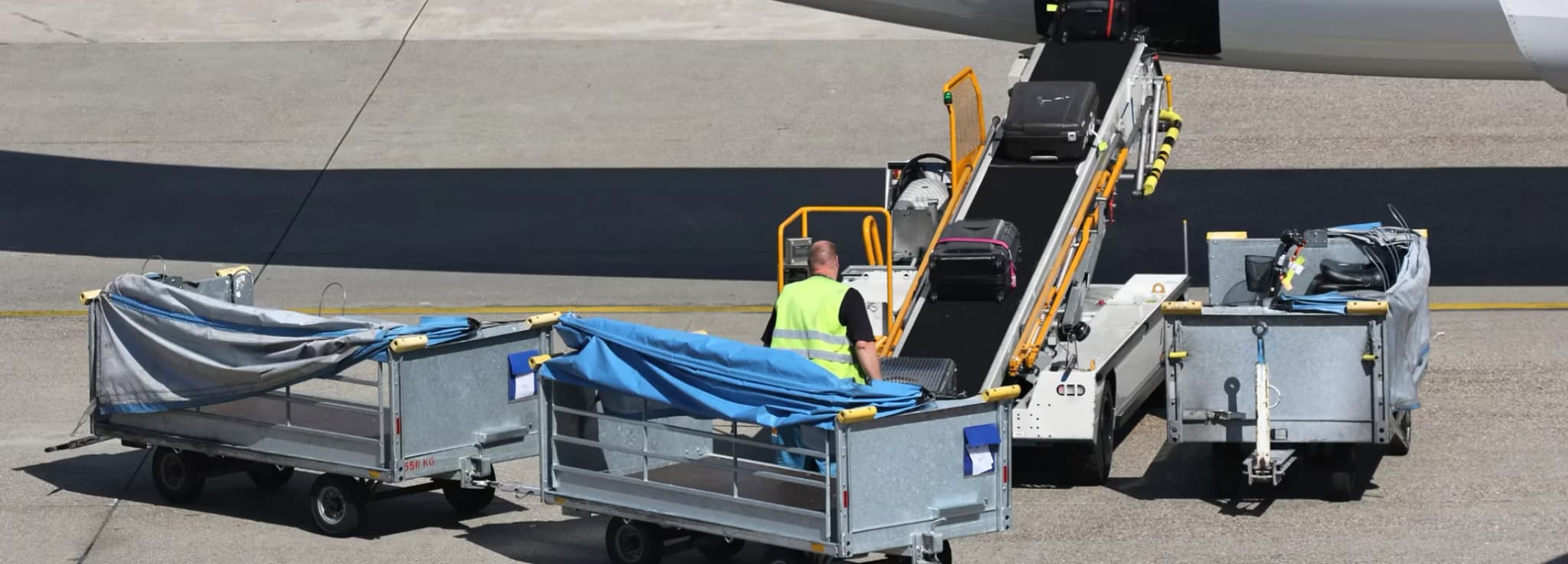
Charter removes the two moments that worry registrars most. There is no cargo terminal dwell time, and there is no handover to a shared freight hold. The crate goes from a secure vehicle to the aircraft at the FBO ramp, then flies direct.
• Time pressure: an auction consignment deadline, an exhibition opening, or an insurance window.
• Courier requirements: the loan agreement requires a courier to stay with the work in transit.
• Confidentiality: the owner, the value, or the destination should not appear on a shared manifest.
• Route gaps: no suitable freighter serves the origin or destination airport.
• Multi-venue tours: one aircraft moves works and curators between cities on a fixed schedule.
Charter is not always the right answer. For routine loans without a courier, scheduled fine art freight is often simpler. Hogani Jets will say so plainly.
Almost any object that fits through the door and within the payload can fly. The questions are where it rides, how it is secured, and what the paperwork says. The table below shows how common object types are usually handled.
Object Type | Where It Usually Rides | Main Transit Risk | Handling Note |
|---|---|---|---|
Framed paintings and works on paper | Cabin, crated and restrained | Humidity swings, shock at loading | Crate acts as the climate buffer |
Sculpture and antiquities | Cabin or hold, by crate size | Weight, shock, tipping | Check floor load and tie-down points |
Jewelry and watches | Cabin, in a lockable case | Theft, loss of custody | Carried as accompanied, declared goods |
Rare wine | Cabin, insulated crates | Heat and prolonged vibration | Pre-cool before loading, log temperature |
Historic documents and manuscripts | Cabin, archival boxes | Humidity, light, handling | Courier keeps it in sight |
Contemporary installations | Cabin or hold, by component | Mixed materials, batteries | Declare any batteries or electronics |
The cabin is usually the better place for artwork. It is pressurized, heated, and in sight of the courier for the whole flight. The baggage hold varies far more from one aircraft to the next.
On many light jets, the external nose and tail lockers are unpressurized and unheated. Many super midsize and larger jets have a pressurized baggage hold reachable in flight. That difference alone can decide the aircraft for sensitive work.
Under FAA charter rules, cabin cargo must sit in an approved rack, bin, or compartment. It can also be secured by another approved means. Otherwise, it must be restrained, packaged to avoid injury, and kept within seat and floor load limits. It must not block an exit or aisle, and cannot sit directly above a seated passenger.
In practice, the operator decides how a crate is restrained in its aircraft. Hogani Jets sends crate dimensions and weights to the operator before booking. The operator then confirms the securing method and seat configuration.
Loan agreements set the environment a work must stay within. Many museums now base those terms on the Bizot Green Protocol, adopted in 2015.
Bizot guidelines for most loans: 16-25°C and stable relative humidity of 40-60%. Humidity should change by no more than ±10% in 24 hours. More sensitive objects need tighter control, set by a conservator for each loan.
Temperature is easy to manage in a private jet cabin. The crew can set it before boarding and hold it through the flight. Humidity is harder, because cabin air at cruise altitude is very dry.
This is why the crate matters more than the cabin. A well-built crate is a sealed, buffered microclimate that keeps humidity stable for the journey. A data logger inside records temperature, humidity, and shock from packing to arrival.
Cabin altitude also varies by aircraft. Across the charter market, older light jets pressurize to about 8,000 feet. A Gulfstream G650 holds a 4,850-foot cabin. A lower cabin altitude means a smaller pressure change on the crate and the courier.
Most transit damage happens during handling, not in cruise. Taxi, takeoff, and landing bring the largest shocks in flight. A crate built with shock isolation absorbs both.
Business jet doors are sized for people, not pallets. A crate that would fit the cabin may not clear the door or turn into the aisle. Measure the crate against the door first, including any tilt limit the conservator sets.
Weight is the second check. Heavy crates eat into payload, which can mean less fuel aboard. A jet with enough published range may need a fuel stop once heavy crates are aboard.
Category | Example Aircraft | Why It Suits Art | Main Limit | Hourly Rate |
|---|---|---|---|---|
Turboprop | Cargo door about 4 ft 4 in by 4 ft 5 in, flat cabin floor | Slower, best on regional legs | $1,100-$2,300 | |
Very Light Jet | HondaJet Elite II | Fast, efficient option for a courier with small work or jewelry | Smallest cabin and baggage space | $1,600-$2,800 |
Light Jet | Phenom 300, Citation CJ3 | Fast for small work and jewelry kept in the cabin | Small door, external lockers often unpressurized | $2,300-$3,800 |
Midsize Jet | Citation XLS Gen2 | Couriers plus small crates on East Coast runs | Limited crate height | $2,800-$5,500 |
Super Midsize | Transcontinental range, larger pressurized baggage | Door still limits tall crates | $4,500-$7,000 | |
Heavy Jet | Challenger 650 | Wide cabin for several crates and couriers | Transatlantic range tight when loaded | $5,500-$8,000 |
Ultra-Long-Range | Global 6000, Gulfstream G650 | Nonstop Miami to Europe with payload margin | Highest cost | $8,000-$20,000 |
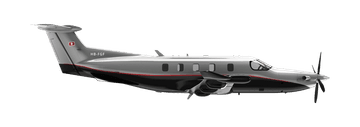
The Pilatus PC-12 has a dedicated cargo door of about 4 ft 4 in by 4 ft 5 in. That is roughly 1.32 m by 1.35 m. It opens onto a flat, pressurized cabin. That makes it one of the few charter aircraft that can load a large flat crate without tilting it.
Crates too large for any business jet door need a dedicated cargo aircraft. Hogani Jets arranges these through its Cargo Charter service. The same chain-of-custody planning applies.
Museum loans often require a courier to travel with the work. A private charter lets the courier sit beside the crate for the whole flight. On scheduled freight, couriers often fly separately and meet the shipment on arrival.
The Arts and Artifacts Indemnity Program is run by the National Endowment for the Arts. It covers eligible international and domestic exhibitions at US nonprofit museums. Its terms require a courier aboard each vehicle carrying indemnified objects. Indemnified value is capped at $150 million per conveyance.
That per-conveyance cap shapes flight planning for major exhibitions. A high-value loan may be split across two aircraft, each with its own courier. Your registrar will know the limit before the first call.
Foreign lenders may also ask for immunity from seizure. Under 22 U.S.C. 2459, the US government can protect objects imported for temporary exhibition from court seizure. The determination must be published in the Federal Register before the objects arrive.
That publication date becomes a hard constraint on the flight. Hogani Jets plans the arrival around it, not the other way around.
Most original paintings and antiques over 100 years old enter the United States duty-free. Duty-free does not mean paperwork-free. The table shows the documents that most often decide whether a flight clears on time.
Document | When It Is Needed | Who Issues or Files It |
|---|---|---|
Condition report and photos | Every move, before packing and on arrival | Registrar or conservator |
US customs entry | Every international arrival | Licensed customs broker |
ATA Carnet | Temporary exhibition or display abroad, not for works offered for sale | USCIB in the United States |
Export permit | Cultural property leaving countries that restrict export | Origin country's cultural authority |
Cultural property certificate | Restricted archaeological or ethnological material | Origin country government |
CITES documents | Works containing ivory, tortoiseshell or protected woods | Wildlife authorities in each country |
An ATA Carnet allows temporary duty-free import of goods for exhibitions and fairs. It is valid for one year. Goods intended for sale cannot travel on a carnet and need a regular customs entry. That matters for any work offered at an art fair.
Restricted cultural property needs proof of lawful export at entry. Without it, US Customs can detain the material for 90 days or longer while documents are found. Antique ivory must also enter through a designated port with valid CITES papers.
Hogani Jets plans the arrival airport around customs. International flights must land at an airport with customs service. The customs broker pre-files entries where possible. That keeps the crate off the ramp and out of storage.
A fine art flight involves several specialists, each with one job. Clear roles are what make the chain of custody auditable. The list below shows who usually does what.
• Fine art shipper: packs the work, builds the crate, seals it, and drives it to the FBO.
• Registrar or courier: signs each handover and stays with the crate in flight.
• Hogani Jets: sources the aircraft, confirms operator acceptance, and coordinates the FBO and timings.
• Part 135 operator: holds operational control, secures the load and flies the aircraft.
• Customs broker: files entries, carnets and permits at each border.
Ask the FBO for vehicle access to the aircraft side before the flight. Direct ramp transfer means the crate is never set down in a public area. Tamper-evident seals and signed handover forms record each step.
Declare any battery-powered data loggers or GPS trackers to the operator in advance. Lithium batteries are regulated in flight, and undeclared devices can delay departure.
Miami is home to Art Basel Miami Beach. The 2026 show runs December 4 to 6. Miami Art Week is one of the busiest private aviation weeks in South Florida.
Ramp space and FBO slots tighten around the fair dates. Book work and couriers as soon as consignment dates are fixed. Plan return flights at the same time, since the post-fair rush is just as heavy.
The same planning applies to the spring fair season in New York and to European fairs. For New York, Teterboro and Westchester County are the usual private arrival airports.
Charter cost depends on the aircraft category, the flight time, and any repositioning. The table shows flight-time estimates for common Miami air routes.
Route | Aircraft Category | Flight Time | Estimated Flight Cost |
|---|---|---|---|
Miami to Palm Beach | Turboprop | About 30 min | $5,100-$8,300 (one-hour minimum typical) |
Miami to New York (Teterboro) | Midsize Jet | About 2 hr 45 min | $7,700 to $15,125 |
Miami to Los Angeles (Van Nuys) | Super Midsize Jet | About 5 hr | $22,500 to $35,000 |
Miami to London (Farnborough) | Ultra-Long-Range Jet | About 8 hr 30 min | $68,000 to $170,000 |
Estimates include typical flight time and repositioning, before landing fees and taxes. Daily minimums of 2 hours apply for super midsize and smaller jets, and 3 hours for heavy and ultra-long-range jets.
The London row shows the range trap in action. A heavy jet's published range looks close enough for Miami to London. With crates, couriers, and winter headwinds on the return, realistic range falls short. An ultra-long-range jet removes the fuel stop.
Your quote is an all-in price for the aircraft, crew, and fuel. Fuel surcharges are rare. Costs no one can know in advance, such as de-icing, are flagged early.
• Included: aircraft, crew, fuel and the operator's aircraft insurance.
• Handled by specialists: crating, fine art transit insurance, customs brokerage, ground security.
• Possible extras: de-icing, hangar space, extended waiting time, overnight crew costs.
The operator's aircraft insurance is not fine art insurance. The artwork needs its own transit policy. Confirm in writing that the policy covers non-scheduled charter flights on your routing.
Hogani Jets coordinates fine art flights through licensed Part 135 operators or the applicable aviation authority abroad. The operator holds full operational control of the aircraft and crew.
Every operator's Part 135 certificate, insurance coverage, and safety record are independently reviewed before booking, with ARGUS, Wyvern, or IS-BAO ratings considered where they exist as one part of that review.
Call Hogani Jets at +1 (855) 660-0573 or email charter@hoganijets.com. Send crate dimensions and weights, the travel window, and the number of couriers. Add any climate terms from the loan agreement.
Reviewed by Matt Hogan — Founder, Hogani Jets & Aviation Specialist.
Can I fly with my own painting as a private passenger?
Yes, if the operator accepts it and it can be secured in the cabin. Case or crate it properly. Check that your art policy covers transit before you fly.
Does artwork have to be crated to fly on a private jet?
Not always. Small works and jewelry often travel in a fitted case. Paintings and fragile objects should be crated. Your conservator or insurer usually makes that call.
Is a jet or a turboprop better for moving artwork?
Jets generally cruise higher and faster, with less propeller vibration. Turboprops offer easier crate loading and shorter runways. The door size and the route usually decide.
Can artwork fly on an empty leg flight?
Rarely. Empty legs follow another client's schedule and can change or be canceled. Art moves are tied to fixed loan, sale, or install dates. A dedicated charter protects those dates.
Can a fine art flight land near a private estate?
Often, yes. Turboprops such as the PC-12 use short runways that many jets cannot. The fine art shipper then handles the final road leg to the property.
Can paintings, wine and jewelry share one charter flight?
Yes, if the operator accepts the combined weight and securing plan. Wine usually travels in insulated crates at cooler settings. Each consignment keeps its own paperwork and condition report.
Is a fine art charter more confidential than shared freight?
Yes. No other shipper's cargo or staff are aboard. Details stay with the owner, shipper, operator, and broker. Customs declarations still apply on international flights.
How far ahead should I book a fine art charter?
Allow time for operator acceptance, FBO access, and customs paperwork. Domestic moves with documents ready can be arranged quickly. Export permits from some countries take far longer than the flight booking.
What happens if weather delays a fine art flight?
The pilot makes the final go or no-go decision. Crates should wait in secure, climate-controlled space, not on the ramp. Build a buffer day around installs and sale deadlines.
Can sculpture or other heavy pieces fly on a private jet?
Yes, within floor load and payload limits. The operator checks crate weight against the cabin floor rating and tie-down points. Quote the crated weight, not the object weight alone.
About Us
Hogani Jets was built on a simple belief: real luxury is quiet, personal, and effortless. We work with a curated list of operators and a small client base so we can give every journey the attention it deserves.
Instant Charter Estimate


Compare Aircraft
Compare private jet categories side by side, range, cabin, passenger capacity, and hourly cost to find the right aircraft for your mission and route.
Your Guide: Hogani Jets Uncensored
Hogani Jets Uncensored: Submit your details for your free guide to private jet programs, honest truths, pricing and more.
