
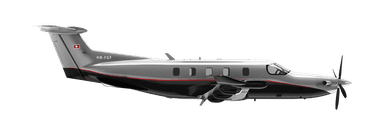
King Air 250
| Passengers | Range | Cruise Speed | Charter From | Best For |
| Up to 8 | 1,720 nm published (1,050 to 1,400 nm practical) | 310 ktas (356 mph) | $1,300/hr | Hot-and-high airports, short runways |
Note: The hourly rate is not the total trip cost. Final pricing includes landing and handling fees, crew, overflight permits, and taxes, plus variable costs such as repositioning, de-icing, wait time, and overnights. Contact Hogani Jets for an accurate all-in quote.
Charter of a King Air 250 starts at $1,300 to $1,900 per flight hour. Manufactured by Beechcraft from 2009 to the present, the King Air 250 is a twin-engine turboprop seating up to nine passengers with a published range of 1,720 nautical miles, though real-world charter range with a full passenger and baggage load typically runs closer to 1,050 to 1,400 nautical miles. Composite scimitar propellers and aerodynamic winglets give it genuinely strong takeoff performance at hot or high-elevation airports other turboprops struggle with. Hogani Jets coordinates each King Air 250 charter through licensed Part 135 operators.
Beechcraft built the King Air 250 specifically to improve on the standard King Air 200's weak point: performance at hot or high-elevation airports, where thinner air eats into both takeoff distance and payload. Composite scimitar propellers, a Ram Air Recovery system, and drag-reducing winglets address that directly, giving the 250 measurably better climb and takeoff numbers than its predecessor at the same field.
None of that comes at the expense of runway flexibility elsewhere. The aircraft still needs only about 2,100 feet to get airborne at sea level, opening up smaller regional airports a light jet would rule out entirely, while carrying up to nine passengers in a cabin shaped to feel roomier than its actual volume suggests.
King Air 250 maximum range is 1,720 nautical miles, a figure reached only under ideal long-range cruise conditions with a light payload. Once a realistic passenger count, baggage, and standard fuel reserves are factored in, the practical range for most charter missions runs closer to 1,050 to 1,400 nautical miles. This gap matters when planning a specific trip: a route that looks comfortably within range on paper can require a fuel stop in practice once real weight is aboard.
The King Air 250 traces back to the King Air 200, introduced in 1974, refined through the higher-powered 200GTI, and unveiled as the 250 in 2010 before FAA certification in June 2011. Twin Pratt & Whitney Canada PT6A-52 engines and one of the more spacious cabins in the medium turboprop category define this generation.
| Specification | King Air 250 |
| Manufacturer | Beechcraft (now Textron Aviation) |
| Aircraft Category | Turboprop (twin-engine) |
| Passenger Capacity | Up to 8 |
| Cabin Length | 16.7 ft (5.09 m) |
| Cabin Width | 4.5 ft (1.37 m) |
| Cabin Height | 4.8 ft (1.46 m) |
| Baggage Capacity | ~55 cu ft |
| Published Max Range | 1,720 nm (1,979 mi) |
| Practical Charter Range | ~1,050 to 1,400 nm |
| Max Cruise Speed | 310 ktas (356 mph) |
| Service Ceiling | 35,000 ft |
| Typical Takeoff Distance | ~2,100 to 2,300 ft |
| Typical Landing Distance | ~2,100 to 2,200 ft |
| Engines | 2 x Pratt & Whitney Canada PT6A-52 |
| Avionics | Rockwell Collins Pro Line 21 or Pro Line Fusion |
| Hourly Charter Rate | $1,300 to $1,900 |
The King Air 250 sits in the middle of a longer development line, not as a standalone design. The King Air 200 debuted in 1974 and was refined into the higher-powered 200GTI, which added the Pro Line 21 avionics suite. it was unveiled in 2010, pairing the 200GTI's engines with the power section from the larger King Air 350, then certified it in June 2011. Production ran until 2020, when the King Air 260 took over with factory-standard Pro Line Fusion avionics and an automated throttle system. All three generations share the same basic airframe and engine family; the real differences are in avionics, systems, and cabin finish.
A turboprop trades a light jet's higher cruise speed for a meaningfully lower hourly rate and stronger runway access. At $1,300 to $1,900 per hour, the King Air 250 costs well below a light jet such as the Citation CJ3, and it reaches smaller or hot-and-high airports a light jet cannot use, though it flies slower over the same distance.
- Lower cost: $1,300 to $1,900 per hour versus $2,500 to $3,500 for a light jet.
- Better hot-and-high performance: composite props and winglets hold takeoff distance down at elevation and heat where many jets need a longer runway or reduced payload.
- Slower cruise: 310 knots versus 480 knots or faster for a light jet.
- Best mission: regional trips of up to nine passengers into airports where runway length or elevation limits jet options.
The King Air 250 typically seats six passengers in an executive club configuration, with room for up to nine in a higher-density layout.
- A common layout combines a four-seat club section with two forward-facing rear seats.
- Two stow-away work tables, a refreshment center, and electronically dimmable windows are standard on most charter-configured aircraft.
- An enclosed rear lavatory doubles as an extra seat when the cabin is filled to capacity.
- Baggage is heated, pressurized, and accessible in flight, unusual for a turboprop; confirm allowance at booking for larger loads such as skis or golf clubs.
The King Air 250 performs best on regional routes into airports where runway length, elevation, or heat limit jet options, and on short-to-medium legs where its lower hourly rate outweighs a jet's speed advantage.
| Route | ICAO Codes | Est. Flight Time | Notes |
| New York to Nashville | KTEB to KBNA | ~2h | Regional business corridor |
| Los Angeles to Aspen | KVNY to KASE | ~1h 30m | Hot-and-high mountain approach |
| Dallas to Denver | KDAL to KDEN | ~1h 45m | High-elevation destination |
| Toronto to New York | CYYZ to KTEB | ~1h 20m | Cross-border regional |
King Air 250 charter rates run $1,300 to $1,900 per flight hour, standard pricing within the turboprop category. Total one-way trip pricing depends on route distance, positioning, and demand. Contact Hogani Jets at charter@hoganijets.com or +1855-660-0573 for a current quote.
| Route | Est. One-Way Price | Notes |
| New York to Nashville | $6,600 to $9,400 | Regional business corridor |
| Los Angeles to Aspen | $13,900 to $18,500 | Hot-and-high mountain approach |
| Dallas to Denver | $14,200 to $20,900 | High-elevation destination |
| Toronto to New York | $6,700 to $10,300 | Cross-border regional |
The $1,300 to $1,900 hourly rate covers core operational costs. Additional fees are quoted separately on every trip, which matters when comparing total trip prices.
- Aircraft operation: fuel, crew, and maintenance are included in the hourly rate.
- Pilots: the King Air 250 is single-pilot certified, though most operators fly it with two for charter service.
- Federal excise tax and segment fees: federally mandated, quoted separately.
- Positioning costs: charged if the aircraft must reposition to your departure airport.
- International handling fees: apply on Caribbean, Canada, and other international hops.
Contact Hogani Jets for current pricing and details.
The most common cross-shop comparisons are the King Air 350, a larger and faster King Air family member, and the Citation CJ2, a light jet with a similar operating cost at lower annual utilization. The King Air 250 wins on hot-and-high runway performance and hourly cost; the King Air 350 wins on cabin size and speed, and the CJ2 wins on cruise speed once budget allows the step up.
| Specification | King Air 250 | King Air 350 | Citation CJ2 |
| Type | Twin-engine turboprop | Twin-engine turboprop | Light jet |
| Passengers | Up to 8 | Up to 9 | Up to 7 |
| Published Range | 1,720 nm | 1,806 nm | 1,600 nm |
| Cruise Speed | 310 ktas (356 mph) | 312 ktas (359 mph) | 407 ktas (468 mph) |
| Hourly Rate | $1,300 to $1,900 | $1,100 to $1,900 | $2,500 to $3,500 |
| Best Use Case | Hot-and-high, short runways | Larger groups, more speed | Faster cruise once budget allows |
Hogani Jets coordinates each King Air 250 charter through licensed Part 135 operators. Hogani Jets does not operate the aircraft directly. Every charter is conducted by a licensed Part 135 direct air carrier whose crew, maintenance, and operations remain under that carrier's independent operational control, with certifications and safety records reviewed as part of every booking.
The King Air 250 is a strong fit on regional legs into hot, high-elevation, or short-runway airports where it outperforms a light jet or a larger King Air variant. The following Hogani Jets route pages cover its most relevant charter corridors.
- New York to Nashville private jet charter
- Los Angeles to Aspen private jet charter
- Dallas to Denver private jet charter
| Relationship | Aircraft | When to Consider |
| Newer Generation | King Air 260 | Factory-standard Pro Line Fusion and automated throttle system; the current-production successor |
| Larger Sibling | King Air 350 | More passengers, more range, and higher cruise speed for larger groups |
| Predecessor | King Air 200 | The original platform the 250 was developed from |
| Step-Up Light Jet | Citation CJ3 | Higher cruise speed once budget allows the step up from a turboprop |
Ready to book a King Air 250 charter or check availability? Contact Hogani Jets for a tailored quote. Call +1-855-660-0573 or email charter@hoganijets.com, and our team will coordinate the right aircraft and operator for your trip.
Reviewed by Matt Hogan — Founder, Hogani Jets & Aviation Specialist.
How much does it cost to charter a King Air 250?
King Air 250 charter rates run $1,300 to $1,900 per flight hour. One-way trip pricing ranges from about $6,600 for shorter regional hops to $15,400 or more on longer legs. Final cost depends on route, positioning, and season.
What is the real range of a King Air 250?
The maximum range is 1,720 nautical miles, reached only under ideal long-range cruise conditions with a light payload. With a realistic passenger and baggage load, practical charter range typically runs closer to 1,050 to 1,400 nautical miles.
What makes the King Air 250 good for hot or high-elevation airports?
Composite scimitar propellers, a Ram Air Recovery system, and aerodynamic winglets give the King Air 250 meaningfully better takeoff and climb performance than the standard King Air 200 in thin, hot, or high-elevation air.
How many passengers can the King Air 250 carry?
The King Air 250 seats up to nine passengers, typically arranged as a six-seat executive club configuration for charter service, with higher-density layouts available.
What is the difference between the King Air 250 and the King Air 260?
The King Air 260 is the current-production successor, adding factory-standard Pro Line Fusion avionics and an automated throttle system. Both share the same basic airframe and PT6A-52 engines; the differences are mainly in avionics, systems, and cabin finish.
How fast does the King Air 250 fly?
The King Air 250 cruises at up to 310 knots true airspeed (356 mph) at maximum cruise; a long-range cruise setting trades some speed for extended range.
What runway length does the King Air 250 need?
The King Air 250 typically requires about 2,100 to 2,300 feet of runway for takeoff at sea level, meaningfully shorter than most light jets, which opens up smaller regional airports.
Are empty leg flights available on the King Air 250?
Yes. The King Air 250's frequent regional positioning creates empty-leg opportunities at meaningful savings off standard one-way rates. Availability is short-notice and date-fixed, so Hogani Jets recommends flexibility when chasing empty-leg pricing.
Is Hogani Jets a direct air carrier?
No. Hogani Jets is an air charter broker and does not own or operate aircraft. All King Air 250 charters are facilitated through licensed Part 135 direct air carriers, who maintain full operational control and regulatory compliance for every flight.
Last Updated: 21 Sep 2026, 11:16 AM
About Us
Hogani Jets was built on a simple belief: real luxury is quiet, personal, and effortless. We work with a curated list of operators and a small client base so we can give every journey the attention it deserves.
Instant Charter Estimate


Compare Aircraft
Compare private jet categories side by side, range, cabin, passenger capacity, and hourly cost to find the right aircraft for your mission and route.
Your Guide: Hogani Jets Uncensored
Hogani Jets Uncensored: Submit your details for your free guide to private jet programs, honest truths, pricing and more.
