
How Far Can a Private Jet Fly? Private Jet Range & Category Breakdown
Private jets range from $1,100 to $2,300 per hour for turboprops covering 1,000 nautical miles to $8,000 to $20,000 per hour for ultra-long-range jets covering 7,700 nautical miles nonstop. Light jets cover up to 2,500 nautical miles. Midsize jets reach 3,200 nautical miles. Super midsize jets extend to 4,000 nautical miles. Ultra-long-range jets connect any two cities on Earth. Real-world range runs 5 to 15 percent below the published maximum on any given flight.
Range is the single most important specification when selecting an aircraft for a given route. Every other variable, including cabin comfort, speed, and operating cost, is secondary if the aircraft cannot reach the destination nonstop. Understanding range by category is the foundation of aircraft selection.
| Aircraft Category | Max Range (nm) | Typical Range (nm) | Example Routes (from US) |
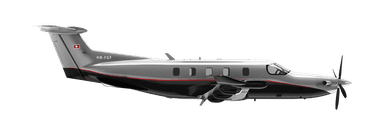
| Turboprop | 900 to 1,500 | 800 to 1,200 | New York to Boston, Dallas to Houston, Denver to Phoenix |
| Very Light Jet | 1,200 to 1,800 | 1,000 to 1,500 | New York to Miami, Chicago to Dallas, LA to San Francisco |
| Light Jet | 2,000 to 2,500 | 1,800 to 2,300 | New York to Miami, Chicago to Los Angeles, Dallas to Seattle |
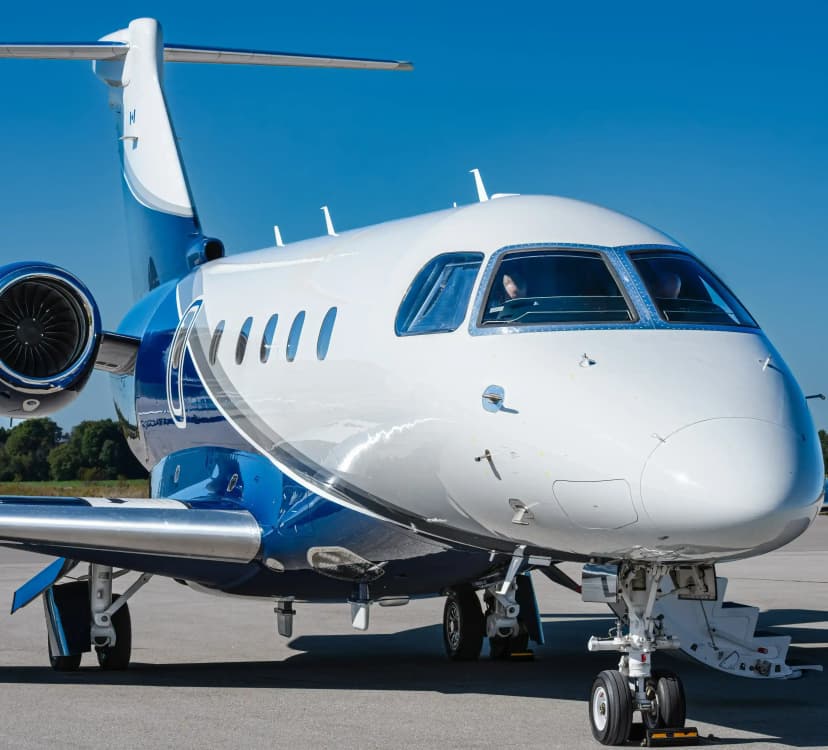
| Midsize Jet | 2,500 to 3,200 | 2,200 to 3,000 | New York to LA, Dallas to New York, Miami to Chicago |
| Super Midsize | 3,200 to 4,000 | 2,900 to 3,600 | New York to London (1 stop), LA to Tokyo (1 stop) |
| Heavy Jet | 4,000 to 5,500 | 3,600 to 5,000 | New York to London, Miami to Paris, LA to Hong Kong (1 stop) |
| Ultra Long Range | 6,500 to 8,000+ | 6,000 to 7,500 | NY to Dubai, LA to Sydney, London to Singapore nonstop |
Published maximum range assumes ideal conditions: optimal payload, favorable winds, specific altitude, and minimum fuel reserves. Real-world missions account for passenger and baggage load, headwinds, air traffic control routing, and the required fuel reserves for alternate airports. Plan for 5 to 15 percent below the published maximum on any given flight. A route at the edge of a category's range often requires a fuel stop or a step up in aircraft category to fly reliably under any conditions.
Passenger and baggage load: Every 100 kilograms of additional weight reduces range by approximately 1 percent. A fully loaded aircraft flies meaningfully shorter distances than the same jet with two passengers and minimal luggage.
Wind: Headwinds reduce effective range by 10 to 20 percent on a bad day. Eastbound transatlantic flights benefit from jet stream tailwinds that meaningfully extend effective range. Westbound flights face the opposite. Flight planning accounts for forecast winds.
Required fuel reserves: FAA and ICAO regulations require aircraft to carry contingency fuel (5 percent of trip fuel), alternate airport fuel, and holding fuel. These reserves are non-negotiable and reduce the fuel available for the primary route.
Air traffic control routing: ATC corridors and restricted airspace can add 50 to 200 nautical miles to a great-circle route. The filed route is rarely the straight line between two points.
Cruise altitude: Higher altitudes mean lower air density and less drag, improving fuel efficiency and effective range. Aircraft climb to optimal altitude as fuel burns off and the aircraft becomes lighter.
A fuel stop is not a failure of planning. On many routes, a brief stop at a convenient interim airport reduces charter cost by 30 to 40 percent while adding only 60 to 90 minutes of total travel time.
New York to London (3,450 nm): A super midsize jet handles this nonstop with favorable winds. In headwind conditions, a brief stop in Iceland or Ireland adds 60 minutes but allows a smaller, less expensive aircraft.
LA to Tokyo (5,440 nm): No super midsize or heavy jet handles this nonstop reliably. An ultra-long-range jet is required, or a fuel stop in Alaska or Japan extends the mission to a heavy jet at significantly lower hourly cost.
The right decision depends on group size, schedule, and budget. When a larger group requires a heavy jet anyway, flying nonstop eliminates the stop cost. When a smaller group can use a super midsize, a fuel stop saves thousands.
| Route Type | Distance Band | Right Category |
| Short regional (hub to hub) | Under 500 nm | Turboprop or VLJ - cost-effective, small airport access |
| Domestic US (city pairs) | 500 to 2,500 nm | Light jet or midsize jet - nonstop for most US routes |
| Cross-country domestic | 2,500 to 3,200 nm | Super midsize - Challenger 350 covers every US city pair nonstop |
| Caribbean and Mexico | 500 to 2,000 nm | Light jet or midsize - most routes nonstop |
| Transatlantic | 3,000 to 5,000 nm | Heavy jet for reliable nonstop New York to Europe |
| Middle East and Asia from US | 6,000 to 8,000 nm | Ultra-long-range only for nonstop - or fuel stop in heavy jet |
| Around the world | 8,000+ nm | Ultra-long-range with fuel stop planning |
The Bombardier Challenger 350 has a maximum range of 3,200 nautical miles. That range covers every major US city pair nonstop. For clients whose travel is predominantly domestic US, the super midsize category delivers 90 percent of the range an ultra-long-range jet provides at 40 to 60 percent lower charter cost per hour. Upgrading to heavy or ultra-long-range capability is worth the premium only when routes consistently exceed 4,000 nautical miles nonstop.
| Aircraft | Max Range (nm) | Service Ceiling | Cabin Zones |
| Gulfstream G800 | 8,200 | 51,000 ft | 4 zones including stateroom |
| Bombardier Global 8000 | 8,000 | 51,000 ft | 4 zones including full bed |
| Gulfstream G700 | 7,750 | 51,000 ft | 4 zones + shower |
| Bombardier Global 7500 | 7,700 | 51,000 ft | 4 zones, 195 cu ft baggage |
| Gulfstream G650ER | 7,500 | 51,000 ft | 3 to 4 zones depending on config |
| Dassault Falcon 8X | 6,450 | 51,000 ft | 3 zones, tri-engine |
Hogani Jets evaluates range at the aircraft sourcing stage for every charter inquiry. The goal is to match the right aircraft category to the route rather than upsell range the client does not need. For a New York to Miami route, a light jet is the correct answer. For New York to London, a heavy jet is the minimum reliable category.
Contact Hogani Jets at charter@hoganijets.com or +1-855-660-0573 to discuss aircraft selection for your route. Charters coordinated through Hogani Jets are facilitated through licensed Part 135 direct air carriers who hold full operational control and regulatory compliance for every flight.
Reviewed by Matt Hogan — Founder, Hogani Jets & Aviation Specialist.
How far can a private jet fly nonstop?
Range varies by category. Turboprops cover 900 to 1,500 nautical miles. Light jets reach 2,000 to 2,500 nm. Midsize jets cover 2,500 to 3,200 nm. Super midsize jets reach 3,200 to 4,000 nm. Ultra-long-range jets cover 7,700 to 8,200 nm nonstop. Plan for 5 to 15 percent below published maximums in practice.
Can a private jet fly from New York to Los Angeles nonstop?
Yes. The New York to Los Angeles route is approximately 2,450 nautical miles. Light jets and midsize jets require a fuel stop even with favorable winds. A super midsize jet covers it comfortably in any conditions, typically in about 5.5 hours. A heavy jet is not necessary and would be significantly more expensive.
Can a private jet fly across the Atlantic nonstop?
Yes, but only heavy jets and ultra-long-range jets. New York to London is approximately 3,450 nautical miles. A heavy jet handles it reliably nonstop. Super midsize jets can reach it with favorable tailwinds. New York to Paris (3,635 nm) and Frankfurt (3,856 nm) require at minimum a heavy jet.
What is the longest nonstop range of any private jet?
As of September 2026, the Gulfstream G800 leads current production at 8,200 nautical miles. The Bombardier Global 8000 follows at 8,000 nm. Both connect virtually any two cities on earth without a fuel stop. The Global 7500 holds the confirmed nonstop flight record at 7,700 nm, Sydney to Detroit in 2019.
How does passenger load affect private jet range?
Each additional 100 kilograms of weight reduces range by approximately 1 percent. A fully loaded aircraft with maximum passengers and baggage flies meaningfully shorter distances than the same aircraft with two passengers. Range margins tighten on routes near the category limit.
When does a fuel stop make financial sense?
On long-haul routes where a smaller aircraft with one fuel stop costs 30 to 40 percent less than a nonstop ultra-long-range jet, a fuel stop of 60 to 90 minutes can represent savings of tens of thousands of dollars. The decision depends on group size, schedule sensitivity, and total trip cost.
Which aircraft covers every major US city pair nonstop?
The Bombardier Challenger 350 and similar super midsize jets, with a range of approximately 3,200 nautical miles, cover every major US city pair nonstop. For clients with predominantly domestic US travel, the super midsize category covers all missions without paying for heavy jet or ultra-long-range capability.
Do private jets fly farther than commercial airliners?
Ultra-long-range business jets have comparable range to the most capable commercial aircraft. The Gulfstream G800 at 8,200 nm competes with the Boeing 777-8 at 8,700 nm. The key difference is passenger count: private jets carry 8 to 19 passengers while commercial aircraft carry 200 or more.
How do winds affect private jet range?
Headwinds reduce effective range by 10 to 20 percent. Tailwinds extend it by a similar amount. Eastbound transatlantic flights benefit from jet stream tailwinds. Westbound North Atlantic crossings face consistent headwinds that can push route requirements into the next aircraft category.
Does Hogani Jets help select the right aircraft for my route?
Yes. Hogani Jets evaluates range requirements at the sourcing stage for every charter inquiry and matches the correct aircraft category to the route. Contact charter@hoganijets.com or +1-855-660-0573 to discuss aircraft selection for any domestic or international route
Last Updated: 21 Sep 2026, 04:30 PM
About Us
Hogani Jets was built on a simple belief: real luxury is quiet, personal, and effortless. We work with a curated list of operators and a small client base so we can give every journey the attention it deserves.
Instant Charter Estimate


Compare Aircraft
Compare private jet categories side by side, range, cabin, passenger capacity, and hourly cost to find the right aircraft for your mission and route.
Your Guide: Hogani Jets Uncensored
Hogani Jets Uncensored: Submit your details for your free guide to private jet programs, honest truths, pricing and more.
