https://d2fh6kg71io623.cloudfront.net/uploads/resources/1789550248313_cropped-image.webp

Quietest Private Jet Cabins: Decibel Ratings & Acoustic Engineering

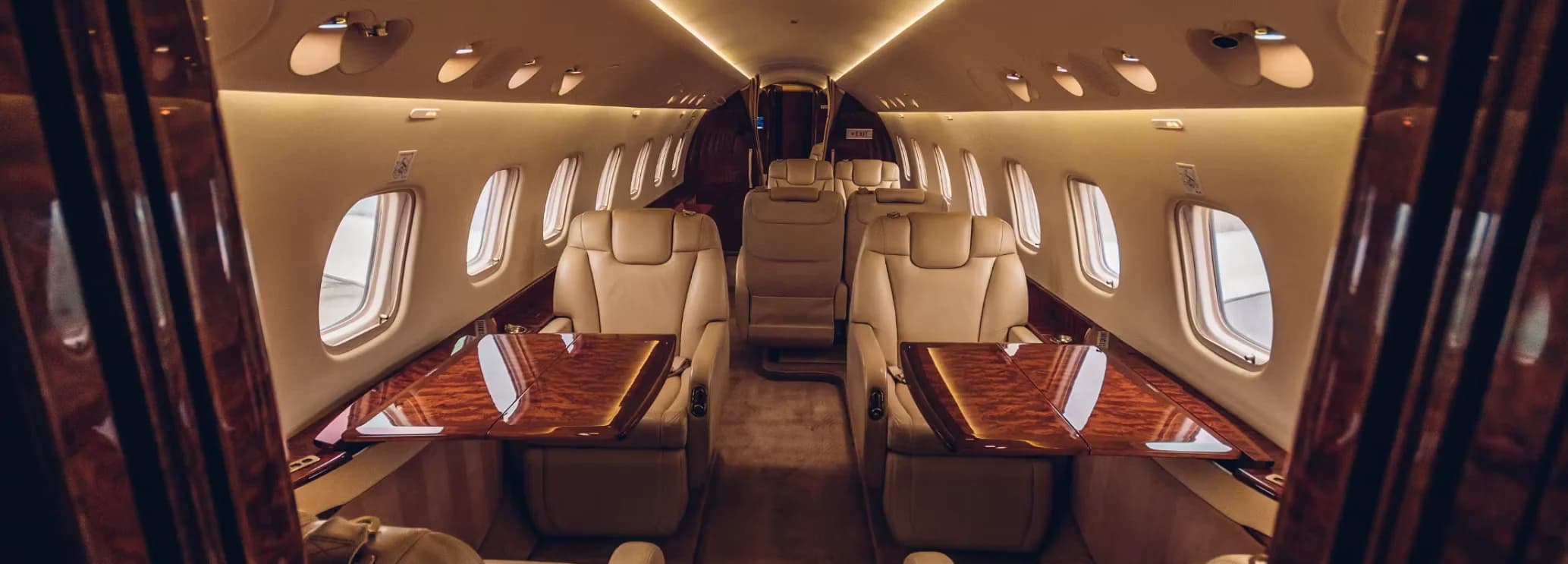
The quietest private jets feature cruise cabin noise levels ranging from 47 to 50 decibels (dB), comparable to a quiet office or library. Flagship ultra-long-range models like the Gulfstream G700 (~47.6 dB), Bombardier Global 7500 (~49 dB), and Dassault Falcon 8X lead the industry. Super-midsize jets like the Cessna Citation Longitude offer exceptional acoustic comfort in their class (high 50s dB), while pure turbine light jets average 55 to 65 dB. Hogani Jets helps clients match acoustic requirements to their specific mission profile.

Cabin noise is more than a minor comfort detail, it is a critical factor in passenger fatigue, productivity, and overall well-being during flight. While commercial airliners routinely operate with ambient sound levels between 75 and 85 decibels, private aviation establishes an entirely different aural baseline. Understanding how manufacturers engineer quiet cabins helps corporate leaders and high-net-worth individuals select the ideal aircraft for long-haul work or rest.

For executives and travelers utilizing flight time to conduct virtual meetings, review documents, or sleep ahead of high-stakes negotiations, excessive noise creates cumulative mental fatigue. Because the decibel scale is logarithmic, a reduction of just 3 dB cuts the sound energy reaching the cabin in half, making minor numerical differences remarkably perceptible over multi-hour sectors.

  • Mass-Density Insulation: Modern business jets integrate hundreds of pounds of specialized multi-density acoustic foam and soundproofing blankets into the fuselage structure to absorb low-frequency resonance.
  • Engine Positioning & Design: Rear-mounted engines and high-bypass turbofans push mechanical thrum and exhaust noise away from the primary passenger seating zones.
  • Acoustic Window Assemblies: Triple-pane window glazing significantly reduces high-speed airframe wind shear noise at stratospheric cruise speeds.
  • Vibration Isolation: Advanced seat mounts and floating interior floorboards decouple the cabin shell from engine and airframe vibrations.
  • ECS Duct Optimization: Designing wide-radius airflow ducts that slow down linear air velocity, eliminating the high-frequency climate control hiss common at altitude.

Aircraft CategoryTypical Cruise Noise (dB)Acoustic Environment DescriptionRepresentative Models
Ultra-Long-Range & Flagship47 – 50 dBLibrary / Quiet OfficeGulfstream G700, Bombardier Global 7500, Falcon 8X
Heavy JetsLow-to-Mid 50s dBConference RoomGulfstream G550, Global 6000, Challenger 650
Super-Midsize JetsMid-to-High 50s dBCalm Open OfficeCessna Citation Longitude, Challenger 350
Midsize Jets50 – 60 dBEasy ConversationCitation XLS+, Hawker 900XP
Light Jets (Pure Turbine)55 – 65 dBBusy Office / Smooth Turbine HumPhenom 300E, Citation CJ4
Turboprops70 – 80 dBPropeller-Induced Low-Frequency PulsesKing Air 350i, Pilatus PC-12

(Note: While light jets utilize pure turbine engines for smooth, consistent sound profiles, turboprops feature a fundamentally distinct acoustic signature driven by propeller blade tip speed and close proximity to the cabin, resulting in higher low-frequency pulses.)

Seat Positioning: Where is the Quietest Spot in the Cabin?

Even when flying on an ultra-quiet aircraft, where you sit inside the cabin dramatically alters your acoustic experience. Because nearly all modern business jets utilize rear-mounted engines, noise propagation follows clear physical rules:

  • The Forward Club Seating: On rear-engined jets, the forward club and conference areas sit farthest from the engine nacelles, making them the quietest locations onboard. Executive passengers planning conference calls or sleep should secure forward seats.
  • The Aft Divan & Rear Cabin: The rear seating area and aft divan sit closest to the engine cores and environmental control exhaust flows, running several decibels louder than the front.
  • Tri-Jet Advantage: Aircraft with a three-engine configuration (such as the Dassault Falcon family) mount the central engine further aft behind the pressure bulkhead, which significantly dampens cabin resonance across the primary seating zones.

Cabin Refurbishment, Maintenance, and Acoustic Longevity

Decibel ratings published by manufacturers reflect factory-fresh airframes under ideal conditions. However, a private jet's acoustic performance degrades over time without rigorous maintenance:

  • Seal Degradation: Over thousands of flight cycles, exterior door seals, baggage compartment gaskets, and window insulation dry out, harden, or develop microscopic gaps that let high-speed air shear noise bleed into the cabin.
  • The Refurbishment Factor: A meticulously maintained, recently refurbished super-midsize or heavy jet with fresh acoustic panels and new seals can often provide a noticeably calmer ride than a newer tail that has endured intensive wear without cabin updates.
  • Interior Materials: Dense carpeting, heavy acoustic curtains, upholstered sidewalls, and soft furnishings all function as passive sound absorbers, whereas minimalist, hard-surface wood and stone finishes increase sound reverberation.

Strategic Questions to Ask Before Booking a Quiet Flight

To ensure your charter flight meets your acoustic expectations, charter clients and corporate flight departments should move beyond basic category browsing by asking operators precise pre-booking questions:

  • What is the specific tail number assigned to this mission? Avoid relying solely on category averages, as individual airframes vary.
  • When was the cabin last refurbished or re-sealed? Use interior update history as a practical proxy for acoustic sealing integrity.
  • Where are the quietest seats located on this specific model? Professional charter operators and flight crews can pinpoint exact zones for sleep or calls.
  • Does the route length justify the category? Match sector length to aircraft acoustics saving heavy jet rates for flights exceeding three hours while utilizing efficient light jets for quick regional hops.

Contact Hogani Jets at charter@hoganijets.com or +1-855-660-0573 to discuss your aircraft preferences and acoustic requirements.

Reviewed by Matt Hogan — Founder, Hogani Jets & Aviation Specialist.

What is the quietest private jet cabin?

The Gulfstream G700 leads with cruise noise around 47.6 dB, closely followed by the Bombardier Global 7500 and Dassault Falcon 8X at approximately 49 to 50 dB. 

How loud is a private jet cabin compared to commercial airlines?

Commercial airliners operate between 75 and 85 dB. Top-tier private jets maintain 47 to 52 dB, making them dramatically quieter and reducing long-flight fatigue. 

What is the quietest super-midsize jet?

The Cessna Citation Longitude is widely recognized as the quietest in its class, featuring advanced acoustic engineering and tuned skin damping that rivals larger aircraft. 

Are the back seats of a private jet louder?

Yes. On rear-engined business jets, the aft cabin sits closest to the engines and runs several decibels louder than the forward club seating area. 

Why are Gulfstream and Bombardier cabins so quiet?

Manufacturers use massive insulation blankets, multi-pane acoustic window glazing, vibration-isolated interior structures, and optimized airflow systems to suppress engine and aerodynamic noise.

How does engine placement affect cabin noise?

Rear-mounted engines direct exhaust and mechanical noise away from the main passenger cabin, significantly lowering ambient decibel levels compared to wing-mounted configurations.

Does cabin age affect sound levels?

Yes. Worn door seals, older insulation, and dated interior panels can increase ambient cabin noise over time, making refurbishment history an important acoustic factor.

What is the difference between dBA and dBSIL?

dBA quantifies overall audible sound frequencies, while speech interference level (dBSIL) specifically evaluates how background noise disrupts human conversation at high altitudes.

Is a quieter cabin necessary for short flights?

For short hops under two hours, moderate cabin noise is easily managed. For transcontinental or international flights, lower decibel levels dramatically reduce fatigue. 

Does Hogani Jets help clients select quiet aircraft?

Yes. Hogani Jets evaluates mission length and passenger requirements to recommend specific aircraft models renowned for superior cabin acoustics and comfort. (21 words)

Last Updated: 16 Sep 2026, 09:31 AM

About Us

Hogani Jets was built on a simple belief: real luxury is quiet, personal, and effortless. We work with a curated list of operators and a small client base so we can give every journey the attention it deserves.

Instant Charter Estimate
compareairCraft1cloud
compareairCraft2cloud

Compare Aircraft

Compare private jet categories side by side, range, cabin, passenger capacity, and hourly cost to find the right aircraft for your mission and route.
https://d2fh6kg71io623.cloudfront.net/uploads/cms/1783689472835_cropped-image.webp

Your Guide: Hogani Jets Uncensored

Hogani Jets Uncensored: Submit your details for your free guide to private jet programs, honest truths, pricing and more.