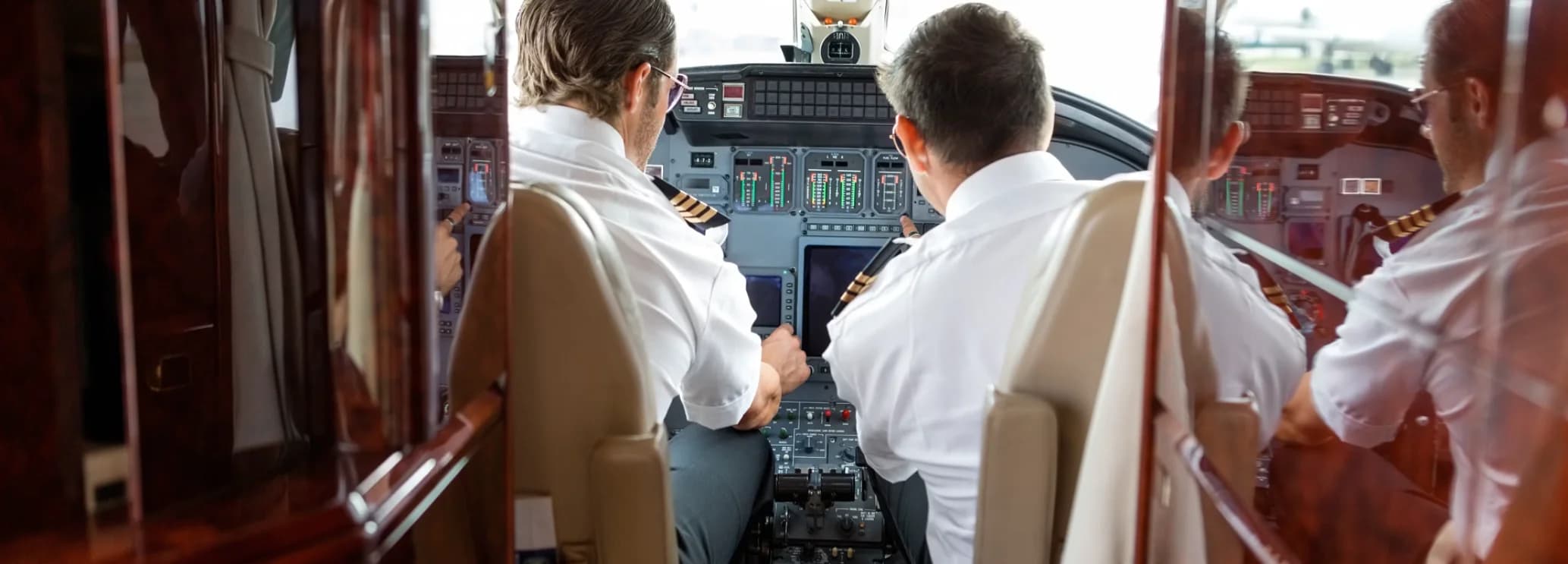
Who Are the Crew on a Private Jet? Pilots, Flight Attendants & Qualifications
Private jet charter operations utilize a highly trained professional flight crew, typically consisting of a Pilot in Command (Captain) and a Second in Command (First Officer) on aircraft over 12,500 pounds under Federal Aviation Administration Part 135 regulations. Single-pilot operations are permitted on select light aircraft, while corporate flight attendants are standard on heavy and ultra-long-range jets. All Part 135 flight crew members hold rigorous federal certifications, including Airline Transport Pilot (ATP) licenses and aircraft-specific type ratings, backed by strict continuous simulator training and duty time limitations. Hogani Jets coordinates flights exclusively with fully qualified, audited operating crews.
Every private jet charter includes crew as part of the service. Understanding who is on the aircraft, what qualifications they hold, and what authority they have answers most first-time client questions about the private aviation crew experience.
The Captain (Pilot in Command)
The Captain is the Pilot in Command (PIC). The PIC has final authority over every decision affecting the safety of the flight. This authority is absolute under FAA regulations and supersedes any instruction from passengers, operators, or ground personnel.
Under FAA Part 135, the Captain of a for-hire charter flight must hold an Airline Transport Pilot (ATP) certificate. The ATP is the highest pilot certification level issued by the FAA. It requires a minimum of 1,500 flight hours, passing rigorous written and practical examinations, and demonstrating proficiency across all flight conditions and failure scenarios.
In addition to the ATP, the Captain must hold a type rating for the specific aircraft being flown. A type rating is an additional certification issued for each class of complex or high-performance aircraft. A Captain flying a Gulfstream G550 holds a separate type rating for the G550 in addition to their ATP. Flying a Challenger 350 requires a Challenger 350 type rating. There is no blanket private jet licence.
The First Officer (Co-Pilot)
The First Officer is the second pilot. On aircraft over 12,500 pounds maximum takeoff weight, FAA Part 135 requires a two-pilot crew for all commercial charter operations. The First Officer shares flight duties with the Captain, monitors systems, handles radio communications, and serves as a second point of authority and safety monitoring throughout the flight.
First Officers under Part 135 must hold at minimum a Commercial Pilot Certificate with an instrument rating. Many hold ATPs. First Officers also carry type ratings for the specific aircraft.
On some light jets under 12,500 pounds, single-pilot operations are permitted under Part 135. Single-pilot charter operations are less common in premium on-demand charter, as most operators providing high-service charter flights use two-pilot crews across their fleet regardless of regulatory minimums.
All crew on Hogani Jets coordinated charters hold the qualifications required by FAA Part 135 for the aircraft and operation type. The Captain holds an FAA Airline Transport Pilot certificate and a type rating for the specific aircraft. The First Officer holds at minimum a Commercial Pilot Certificate with an instrument rating, and typically an ATP. Both hold current FAA medical certificates. Both complete recurrent training on the aircraft type at intervals required by Part 135, typically every 6 to 12 months. ARGUS and Wyvern operator audits review crew training records as part of their certification process.
When a Flight Attendant Is Required
FAA regulations require a flight attendant on aircraft with more than 19 passenger seats. This threshold means most business jets do not legally require a flight attendant. However, many operators include a flight attendant on heavy jets and ultra-long-range aircraft as a standard service element, particularly for groups of 9 or more passengers.
What the Flight Attendant Does
The flight attendant on a private jet serves two functions: safety and service. The safety function is the primary one under FAA regulations. The flight attendant is trained in emergency procedures specific to the aircraft, including evacuation, emergency equipment operation, first aid, and passenger safety briefing requirements.
The service function covers catering, beverage service, cabin comfort management, passenger requests, and coordination with the flight crew. On ultra-long-range aircraft, the flight attendant manages multiple meal periods, maintains the galley, and ensures the cabin environment for long-duration flights.
When a Flight Attendant Is Present on Smaller Aircraft
Some operators include a flight attendant on midsize and super midsize jets for specific trips, particularly wedding charters, honeymoon departures, and high-profile bookings where enhanced service is part of the brief. This is arranged at booking through Hogani Jets when the client requests enhanced cabin service.
Aircraft Category | Captain | First Officer | Flight Attendant |
|---|---|---|---|
Turboprop (under 12,500 lbs) | Required (ATP) | Optional; single-pilot ops permitted | Not required; rarely included |
Very Light Jet (under 12,500 lbs) | Required (ATP) | Optional; single-pilot ops permitted | Not required; rarely included |
Light Jet | Required (ATP) | Standard on reputable operators | Not required; rare |
Midsize Jet | Required (ATP) | Required (over 12,500 lbs) | Not required; sometimes included for premium trips |
Super Midsize | Required (ATP) | Required | Not required by FAA; common on larger bookings |
Heavy Jet | Required (ATP) | Required | Standard on most heavy jet charters; included in rate |
Ultra Long Range | Required (ATP) | Required | Standard; required for multi-zone service on long sectors |
FAA Part 135 imposes strict duty time limits on commercial charter crew. These limits exist to prevent fatigue-related errors and are not waivable by the operator or the client.
Under Part 135, the maximum flight time in any 24-hour period is 8 hours for single-pilot operations. For two-pilot crews, maximum flight time extends to specified limits depending on rest periods taken. The maximum duty period (from reporting to the FBO to completion of the flight) is 14 hours for many Part 135 operations.
Minimum rest between duty periods is 10 hours. This is a hard requirement. If a client schedules a departure that would require crew to violate rest minimums based on their prior duty, the operator will adjust the departure time. Crew rest requirements are not negotiable and are enforced by the Part 135 operator as the holder of operational control.
For multi-leg trips, overnight stays, and international operations, Hogani Jets builds crew rest requirements into the itinerary at the planning stage. A multi-city itinerary that exceeds crew duty limits will include crew accommodation costs as part of the trip budget.
The Captain has absolute authority over the aircraft and all persons on board from the moment the aircraft door closes until it opens at the destination. This authority is established by federal law (49 U.S.C. 44902) and FAA regulations.
The Captain may refuse boarding to any passenger. The Captain may return to the departure airport at any point during the flight. The Captain may divert to an alternate airport for any safety or operational reason without advance notice or approval from passengers. The Captain may deny or terminate alcohol service at any point.
These authorities exist for safety reasons and are not subject to negotiation. In practice, the vast majority of charter flights proceed without any exercise of these authorities. But passengers should understand that the Captain's judgment on safety matters is final.
Private jet crew are professionals. The Captain and First Officer are occupied with flight duties and are not available for extended conversation while managing the flight. Brief, direct communication is appropriate. If there is a catering issue, a cabin temperature concern, or a passenger medical situation, inform the flight attendant on equipped aircraft, or address the Captain directly in a non-emergency. Do not enter the cockpit without invitation. For routine requests during flight, wait for a stable cruise phase before approaching the crew.
Operator certification programmes such as ARGUS Platinum and Wyvern Wingman include crew training record review as part of their audit process. These audits verify that crew training is current, that recurrent checks have been completed, and that the operator's training programme meets or exceeds Part 135 requirements.
Hogani Jets sources aircraft from ARGUS and Wyvern certified operators for the majority of charter bookings.
Gratuity for private jet crew is customary but not required. A tip of $50 to $100 per crew member per flight leg is appropriate for a standard domestic charter. For international trips, overnight trips, or flights where the crew provided exceptional service, $100 to $200 per crew member is common.
For a flight attendant who managed a full catering and service operation on a long-haul flight, a gratuity of $100 to $250 is appropriate. Tips are given in cash at the end of the flight. The Captain and First Officer are tipped separately from the flight attendant.
Crew composition for any charter is confirmed at booking. Clients requesting a flight attendant on an aircraft where one is not standard can request this through Hogani Jets. Availability of flight attendants varies by operator and market.
Contact Hogani Jets at charter@hoganijets.com or +1-855-660-0573. All charters are facilitated through licensed Part 135 direct air carriers who hold full operational control and regulatory compliance for every flight.
Reviewed by Matt Hogan — Founder, Hogani Jets & Aviation Specialist.
How many pilots are on a private jet?
Two pilots (Captain and First Officer) are required on Part 135 charter aircraft over 12,500 pounds. Single pilot flights are allowed on select light jets, though most operators require two pilots fleetwide.
What qualifications does a private jet pilot need?
Captains hold an FAA Airline Transport Pilot certificate requiring 1,500 hours and a specific type rating. First Officers hold at least a Commercial Pilot Certificate. Both complete recurrent simulator training every six to twelve months.
Is there a flight attendant on a private jet?
FAA rules require a flight attendant on aircraft exceeding 19 passenger seats. While optional on smaller jets, flight attendants are standard on heavy aircraft and can be requested for midsize charters through Hogani Jets.
Can the captain refuse boarding on a private jet?
Yes. The Captain holds absolute legal authority as Pilot in Command under FAA regulations to refuse boarding, divert flights, or terminate alcohol service. Safety decisions are final and non-negotiable.
What is an ATP certificate?
An Airline Transport Pilot certificate is the highest FAA certification, requiring 1,500 flight hours, rigorous examinations, and demonstrated proficiency. Part 135 mandates that charter Captains hold this credential.
What is a type rating for a private jet?
A type rating is an additional FAA certification required for each complex or high-performance aircraft class. There is no general private jet license; pilots must earn a specific rating for every aircraft model.
How long can a private jet crew fly in one day?
FAA Part 135 limits single-pilot flight time to 8 hours per day, with extended limits for two-pilot crews. Maximum duty days reach 14 hours, requiring a minimum of 10 consecutive hours of rest.
How much should I tip the private jet crew?
Standard domestic tips range from $50 to $100 per pilot per flight leg, and $100 to $200 for international trips. Flight attendants typically receive $100 to $250, provided in cash upon trip completion.
Are private jet pilots the same qualification as airline pilots?
Yes. Part 135 charter pilots hold the same Airline Transport Pilot certificate as commercial airline pilots, complete with identical hour requirements, rigorous examinations, and specialized aircraft type training.
About Us
Hogani Jets was built on a simple belief: real luxury is quiet, personal, and effortless. We work with a curated list of operators and a small client base so we can give every journey the attention it deserves.
Instant Charter Estimate
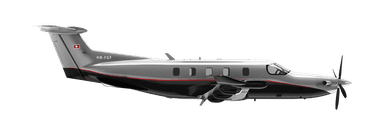


Compare Aircraft
Compare private jet categories side by side, range, cabin, passenger capacity, and hourly cost to find the right aircraft for your mission and route.
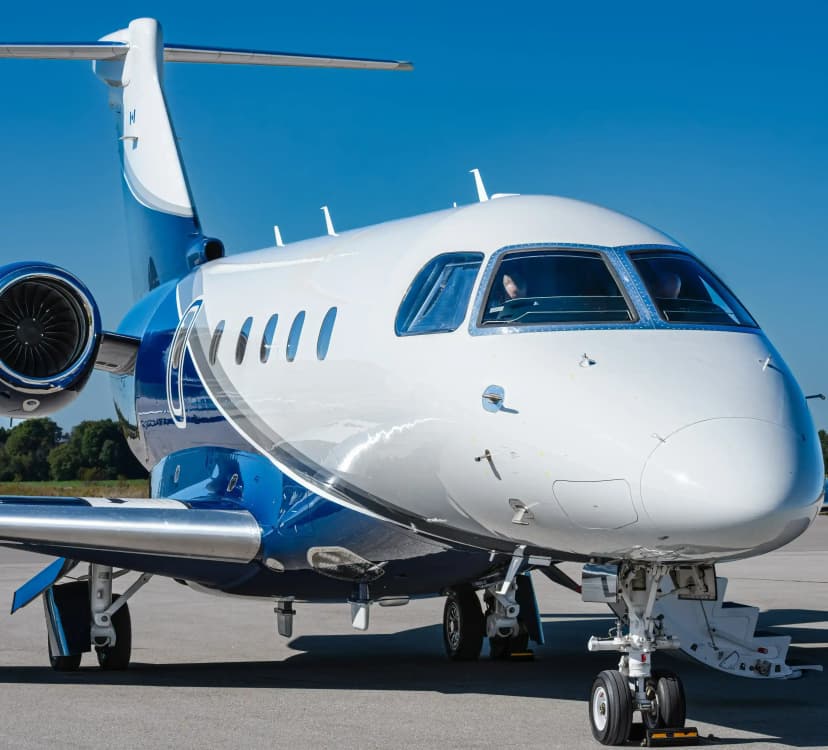
Your Guide: Hogani Jets Uncensored
Hogani Jets Uncensored: Submit your details for your free guide to private jet programs, honest truths, pricing and more.
