
Private Jet Charter to Long Island, Bahamas
Private jet charter to Long Island starts at $6,000+ one way, with flights from South Florida averaging about 1 hour 15 to 30 minutes. Long Island is served by two short-runway airports: Stella Maris (MYLS / SML) in the north, with a 4,019 ft (1,225 m) runway, and Deadman's Cay (MYLD / LGI) in the centre and south, with a 4,042 ft (1,232 m) runway. Both are short-field strips suited to turboprops and very light jets, with select light jets under strict performance conditions. This is a remote, low-density island known for Dean's Blue Hole and world-class diving. Hogani Jets coordinates each charter through licensed Part 135 operators.
Long Island is one of the most scenic and unspoiled of the southern Bahamas, a long, narrow island of dramatic cliffs, quiet beaches, and the famous Dean's Blue Hole. It is a remote, low-density destination with limited commercial service, drawing divers, beach travelers, and those seeking seclusion over a built-up resort scene. With two short-runway airports spread along an 80-mile island, private aviation is the practical way in, and aircraft selection is the central planning point.
Dean's Blue Hole and World-Class Diving
Long Island is home to Dean's Blue Hole, one of the deepest known blue holes in the world at over 600 feet, and a world-renowned freediving site. Combined with wall diving and reef sites along the coast, diving is the island's signature draw and a major reason travelers charter out here. It is a niche, high-intent destination.
Remote Luxury and Seclusion
Long Island offers a quiet, remote-luxury character rather than a large-resort scene. A small set of well-regarded beach resorts and lodges sits along the coast, suited to travelers who want striking scenery, excellent diving, and genuine seclusion. Interest in this kind of off-the-beaten-path Bahamas experience has been growing steadily.
Two Airports for a Long Island
Long Island stretches more than 80 miles north to south, so airport choice matters. Stella Maris in the north and Deadman's Cay in the centre and south each serve different parts of the island. Matching the arrival airport to the final destination, the way a private charter can, avoids a long ground transfer along the island's single main road.
Long Island has two public airports, one in the north and one in the centre and south. Airport selection is destination-driven, since the island is long and ground transfer between regions takes time.
Airport | ICAO / IATA | Runway | Region Served | Notes |
|---|---|---|---|---|
Stella Maris (PRIMARY) | MYLS / SML | 4,019 ft (1,225 m) Rwy 13/31 | Northern Long Island | The primary gateway and better-maintained field. A short-field strip under 5,000 ft: turboprops and very light jets, with select light jets on performance review. Hawkline Aviation handling, Jet-A. Customs daytime. |
Deadman's Cay | MYLD / LGI | 4,042 ft (1,232 m) Rwy 9/27 | Central & southern Long Island | Serves Clarence Town and the south. A short-field strip; AirNav notes a rougher surface and gravel on the runway, so it favours turboprops. Customs daytime. |
Both Long Island airports are short-field strips under 5,000 ft, suited to turboprops and very light jets, with select light jets only on performance review. Stella Maris (MYLS) is the primary, better-maintained gateway for the north. Deadman's Cay (MYLD) serves the centre and south but has a rougher runway surface per AirNav, which makes a turboprop the sensible choice there. Airport selection is matched to the final destination on this long island.
Stella Maris (MYLS) is served by Hawkline Aviation with Jet-A fuel and customs during daytime hours, the better-maintained of the two fields. Deadman's Cay (MYLD) has basic, operator-arranged handling with daytime customs. Hogani Jets coordinates fuel and ground services ahead of each flight.
| Airport | Handler | Notes |
|---|---|---|
| Stella Maris (SML) | Hawkline Aviation | Jet-A fuel, customs daytime. The primary, better-maintained northern gateway, closest to Cape Santa Maria. |
| Deadman's Cay (LGI) | Basic, operator-arranged | Customs daytime. Serves the centre and south; rougher runway surface favours turboprops. |
Yes, with the right aircraft. Private jets fly nonstop into Long Island from South Florida and Nassau. The Bahamas requires a valid passport; U.S. citizens need no visa for stays under 8 months. Both airports have customs during daytime hours, which is built into arrival timing.
Direct Routes Into Long Island
- Miami and Fort Lauderdale: approximately 1 hour 15 to 30 minutes by turboprop or very light jet. The primary departure market.
- Nassau: approximately 45 to 60 minutes by turboprop, the common inter-island leg.
- New York and the Northeast: approximately 3.5 to 4.5 hours, typically with a technical stop given the short runways and aircraft limits.
Aircraft suitability matters more than route distance for Long Island. A turboprop or very light jet fits both airports; select light jets are possible only on performance review. Midsize and heavy jets are not feasible at either field. This is the key planning point for the island.
Long Island's two runways, 4,019 ft at Stella Maris and 4,042 ft at Deadman's Cay, are both short by jet standards and well under the 5,000 ft threshold where larger jets become feasible. Turboprops are the natural fit; very light jets operate under short-field conditions; select light jets are possible only on a performance review. Midsize and heavy jets are not feasible at either airport.
Aircraft Feasibility by Airport
Aircraft Category | Passengers | Stella Maris (4,019 ft) | Deadman's Cay (4,042 ft) |
|---|---|---|---|
Executive Turboprop | 6-9 | Fully feasible | Fully feasible |
Very Light Jet | 4-6 | Feasible, short-field | Conditional, surface-sensitive |
Light Jet | 5-9 | Conditional, performance review | Not recommended |
Midsize Jet | 7-9 | Not feasible | Not feasible |
Heavy / Larger Jets | 10-19 | Not feasible | Not feasible |
Both airports are genuine short-field strips below 5,000 ft, so the larger-jet rules do not apply here. Turboprops are the answer for most Long Island charters. Very light jets work at Stella Maris under short-field conditions; light jets only on a performance review. Deadman's Cay has a rougher surface, so a turboprop is strongly preferred there. Passenger figures shown are maximum capacity; typical configurations carry fewer.
Flight Logistics and Arrival Planning
Long Island is a long, low-density, distributed destination, so planning centres on matching aircraft to runway and airport to final settlement. Both fields are daytime only. Pre-departure documentation and arrival handling are coordinated ahead of each flight through the Part 135 operators Hogani Jets works with.
- Arrival airport is chosen to minimise ground transfer: Stella Maris for the north, Deadman's Cay for the centre and south.
- Customs operates during daytime hours at both airports; arrival timing is planned around this window.
- Passengers disembark at the general aviation area; ground transfer to the resort or settlement follows, with travel time depending on distance along the island.
- A valid passport is mandatory. No visa required for U.S. citizens on stays under 8 months.
Aircraft selection for Long Island is governed by the two short runways, the route, and the group. Cruise speed is included below as a reference. Turboprops are the standard; very light jets are conditional, and light jets are limited to Stella Maris on review.
Category | Example Aircraft | Passengers | Cruise Speed | Runway Fit | Recommended Use |
|---|---|---|---|---|---|
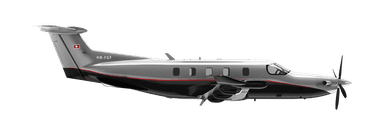
Turboprop | King Air 350, Pilatus PC-12, Cessna Caravan | 6-9 | ~201 to 357 mph | Excellent | The default for both airports, from Florida and Nassau |
Very Light Jet | Citation Mustang, Phenom 100 | 4-6 | ~391 to 437 mph | Short-field | Stella Maris under short-field conditions |
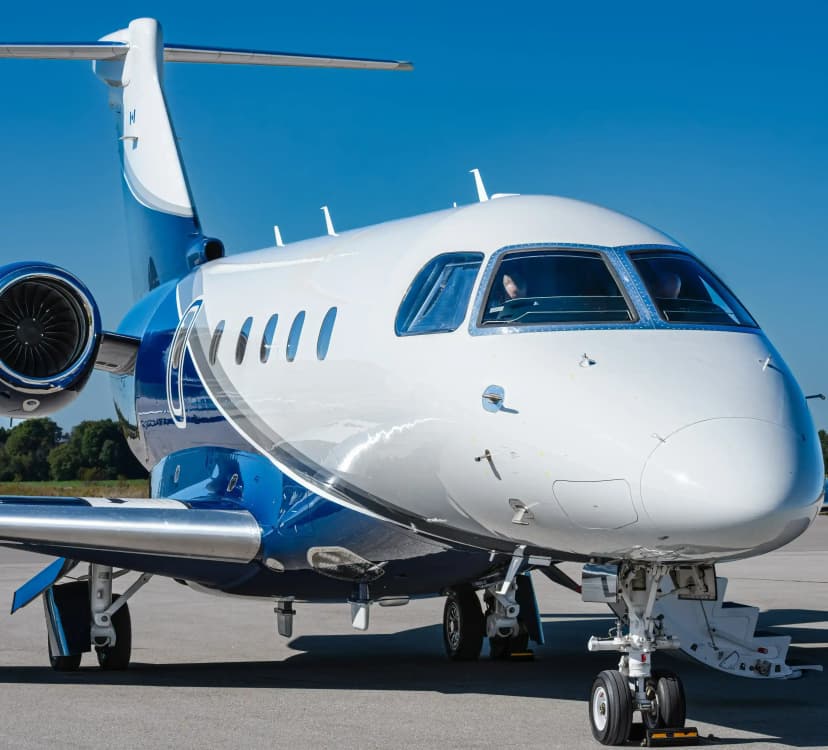
Light Jet | Citation CJ3, Phenom 300 | 5-9 | ~480 to 521 mph | Conditional | Stella Maris only, on performance review |
Baggage and payload planning is critical on Long Island's short runways. Divers travelling with gear should plan around a turboprop and confirm payload at booking; the Caravan's large hold is an advantage for gear-heavy trips, and its rugged build suits the rougher Deadman's Cay surface.
Long Island charter traffic is short-haul from South Florida and Nassau, almost entirely by turboprop and very light jet. The arrival airport is matched to the final destination.
Route | Distance | Flight Time | Best Aircraft / Airport |
|---|---|---|---|
Miami (KOPF) to Long Island | ~360 mi / 313 nm | ~1h 15m to 1h 30m | Turboprop or Very Light Jet. Airport by destination |
Fort Lauderdale (KFXE) to Long Island | ~350 mi / 304 nm | ~1h 15m to 1h 30m | Turboprop or Very Light Jet |
Nassau (MYNN) to Long Island | ~165 mi / 143 nm | ~45 to 60 min | Turboprop. Common inter-island leg |
New York (KTEB) to Long Island | ~1,200 mi / 1,043 nm | ~3h 30m to 4h 30m | Light Jet with technical stop, performance-dependent |
Private jet charter to Long Island starts at $6,000+ one way for a turboprop from Nassau, with direct turboprop and very light jet charters from South Florida starting around $9,000+. Reliance on smaller aircraft keeps pricing relatively stable. All prices are starting points; the final quote reflects the specific aircraft and schedule.
Route | Aircraft | One-Way Price | Passengers | Flight Time |
|---|---|---|---|---|
Nassau to Long Island | Turboprop | $6,000+ | Up to 9 | ~45 to 60 min |
Miami to Long Island | Turboprop / Very Light Jet | $9,000+ | Up to 9 | ~1h 15m to 1h 30m |
Fort Lauderdale to Long Island | Turboprop / Very Light Jet | $9,500+ | Up to 9 | ~1h 15m to 1h 30m |
New York to Long Island | Light Jet (with stop) | $23,000+ | Up to 6 | ~3h 30m to 4h 30m |
Prices reflect standard one-way charter starting rates including flight time, repositioning, fuel, crew, taxes, and international handling fees. Final pricing depends on the specific aircraft, date, and availability. Contact Hogani Jets at charter@hoganijets.com or +1-855-660-0573 for a current quote.
Hourly Charter Rates by Aircraft Category
One-way charter prices include flight time plus repositioning, fuel, crew, taxes, and international handling fees. The hourly rates below show the underlying cost per flight hour for each aircraft category.
Aircraft Category | Hourly Rate | Example Aircraft |
|---|---|---|
Turboprop | $1,100 – $2,300/hr | King Air 350, Pilatus PC-12, Cessna Caravan |
Very Light Jet | $1,600 – $2,800/hr | Citation Mustang, Phenom 100 |
Light Jet | $2,300 – $3,800/hr | Citation CJ3, Phenom 300 |
Pricing Factors Specific to Long Island
- The short runways limit the aircraft pool to turboprops and very light jets, which keeps pricing relatively stable since midsize and heavy jets are not a factor.
- Lower traffic volume means a smaller pool of positioned aircraft, so availability and repositioning affect price more than at busy hubs.
- Both airports operate daytime customs, which factors into aircraft and crew scheduling on a remote island.
- International handling fees apply on arrival and departure, typically adding $500 to $1,000 to the total trip cost.
Long Island operates year-round, with diving conditions and weather shaping demand.
- Peak season (December through April): Best weather and prime diving conditions with excellent visibility. Book 2 to 6 weeks ahead, more for holidays.
- Diving and freediving season: Dean's Blue Hole and the reef sites are excellent much of the year; the calmest seas generally fall in the winter and spring months.
- Shoulder season (May and November): Favorable conditions with pricing below peak and better availability.
- Hurricane season (June through October): Weather risk, particularly August and September. Flexible scheduling is important given the limited aircraft pool.
This guide is written for travelers arriving by private jet. The focus is on the arrival sequence, the island's diving-and-seclusion character, and the limited but well-suited accommodation.
Where to Stay on Long Island
Long Island is a remote-luxury and diving destination rather than a large-resort scene, and its accommodation reflects that honestly: a small set of well-regarded beach resorts and lodges along the coast. The three properties below are the leading options for charter clients.
Hotel / Resort | Setting | Category | Notes |
|---|---|---|---|
| North (near Stella Maris) | Beach Resort | The island's flagship beach resort, set on a stunning white-sand beach near Cape Santa Maria. Beachfront rooms and villas, the standout choice for most luxury travelers. Best served by Stella Maris. | |
Stella Maris, north | Resort & Marina | A long-established resort on the northern bluffs, with a marina, dive operation, and its own airstrip access. A hub for diving and boating on the island. | |
The Greenwich Lodge | Long Island | Boutique Lodge | A smaller boutique lodge focused on fishing, diving, and seclusion. A quiet, comfortable base for the active traveler. |
Long Island is a remote, diving-led destination, not a broad luxury market. Cape Santa Maria is the flagship beach resort, Stella Maris Resort Club is the established diving-and-marina hub, and The Greenwich Lodge is a smaller boutique option. Most northern properties are best served by Stella Maris Airport; Hogani Jets confirms the closest airport at booking.
Places to Visit on Long Island
The following spots are the most requested by visitors. All details flagged for Matt's confirmation before publishing.
- Dean's Blue Hole: One of the deepest blue holes in the world at over 600 feet, a world-renowned freediving site near Clarence Town. The island's signature landmark.
- Cape Santa Maria Beach: A long stretch of white sand and turquoise water in the north, regularly rated among the finest beaches in the Bahamas.
- Clarence Town: The island's main southern settlement, known for its twin hilltop churches and harbour.
- Wall diving and reef sites: Long Island's coast offers dramatic wall diving and healthy reefs, a major draw alongside the blue hole.
- Columbus Monument: A monument on the northern cliffs marking the island's place in Columbus's voyages, with sweeping views.
Activities That Affect Flight Planning
- Scuba diving and freediving: FAA recommends a 24-hour interval between diving and flying. With Dean's Blue Hole a major draw, schedule dive days at least 24 hours before departure.
- Beach and nature days: No flight planning impact.
- Boat trips and reef excursions: Same-day trips do not affect departure scheduling.
Practical Considerations
Long Island uses the Bahamian dollar, pegged 1:1 to the U.S. dollar, so no currency exchange is required. The island is long and remote: services are limited, settlements are spread along the single main road, and a rental vehicle or resort transfer is essential. Cell coverage is patchy outside the settlements. There are no major medical facilities; serious events require evacuation to Nassau, a genuine consideration given the island's length and remoteness.
Matt's Recommendation
Long Island is a divers' island and a quiet-luxury island, with that incredible blue hole as the headline. It is remote and the runways are short, so this is turboprop country for me, a King Air or a PC-12 every time, occasionally a very light jet into Stella Maris. I match the airport to where people are staying, Stella Maris for Cape Santa Maria and the north, Deadman's Cay for the south, and I am honest that Deadman's Cay has a rougher strip, which is another reason I lean turboprop. For divers, the golden rule applies: no diving inside 24 hours of the flight home.
Hogani Jets coordinates all private jet charters through licensed Part 135 operators. Hogani Jets does not operate the aircraft directly. Every charter is conducted by a licensed Part 135 direct air carrier whose crew, maintenance, and operations remain under that carrier's independent operational control, with certifications and safety records reviewed as part of every booking.
Contact Hogani Jets at charter@hoganijets.com or +1-855-660-0573 to plan a Long Island charter or Bahamas diving itinerary.
Reviewed by Matt Hogan — Founder, Hogani Jets & Aviation Specialist.
Can private jets land on Long Island, Bahamas?
Yes. Long Island is served by Stella Maris and Deadman’s Cay, both short-field airports best suited to turboprops and very light jets. Selected light jets may use Stella Maris subject to performance review.
How much does a private jet charter to Long Island cost?
Charter to Long Island starts at $6,000+ for a turboprop from Nassau, with direct turboprop and very light jet charters from South Florida starting around $9,000+. A light jet from New York with a technical stop starts around $23,000+. Final pricing depends on aircraft, date, and availability.
How long is the flight from Miami to Long Island?
From South Florida, the trip typically takes about 75 to 90 minutes, depending on the aircraft and departure airport. From Nassau, expect roughly 45 to 60 minutes.
Which airport should I use for Long Island?
It depends on your destination. Stella Maris (MYLS) serves the north, including Cape Santa Maria, and is the better-maintained runway. Deadman's Cay (MYLD) serves the centre and south, including Clarence Town, but has a rougher surface. Hogani Jets matches the airport to where you are staying.
What are the runway lengths at Long Island's airports?
Stella Maris (MYLS) has a 4,019 ft (1,225 m) runway (13/31). Deadman's Cay (MYLD) has a 4,042 ft (1,232 m) runway (9/27). Both are asphalt, daytime fields under 5,000 ft, suited to turboprops and very light jets. Deadman's Cay has a rougher surface, favouring turboprops.
Can heavy jets operate into Long Island?
No. Both runways are short-field strips around 4,000 ft and do not support midsize or heavy jets. Turboprops are the standard, with very light jets at Stella Maris under short-field conditions and select light jets only on a performance review.
Do I need a passport to fly private to Long Island?
Yes. The Bahamas requires a valid passport for all visitors. U.S. citizens do not require a visa for stays under 8 months. Both airports have customs during daytime hours, which is planned into arrival timing.
Where should I stay on Long Island?
For a classic beach stay, Cape Santa Maria Beach Resort & Villas is the main choice in the north. Stella Maris Resort Club suits travelers focused on diving and marina access, while The Greenwich Lodge offers a smaller boutique-style stay.
Why is Long Island famous for diving?
Long Island is home to Dean's Blue Hole, one of the deepest blue holes in the world at over 600 feet and a world-renowned freediving site, along with dramatic wall diving and healthy reefs along the coast. Remember the 24-hour interval between diving and flying.
Is Hogani Jets a direct air carrier?
No. Hogani Jets is an air charter broker and does not own or operate aircraft. All charters are facilitated through licensed Part 135 direct air carriers who maintain full operational control and regulatory compliance for every flight.
Last Updated: 22 Sep 2026, 08:27 AM
About Us
Hogani Jets was built on a simple belief: real luxury is quiet, personal, and effortless. We work with a curated list of operators and a small client base so we can give every journey the attention it deserves.
Instant Charter Estimate


Compare Aircraft
Compare private jet categories side by side, range, cabin, passenger capacity, and hourly cost to find the right aircraft for your mission and route.
Your Guide: Hogani Jets Uncensored
Hogani Jets Uncensored: Submit your details for your free guide to private jet programs, honest truths, pricing and more.
