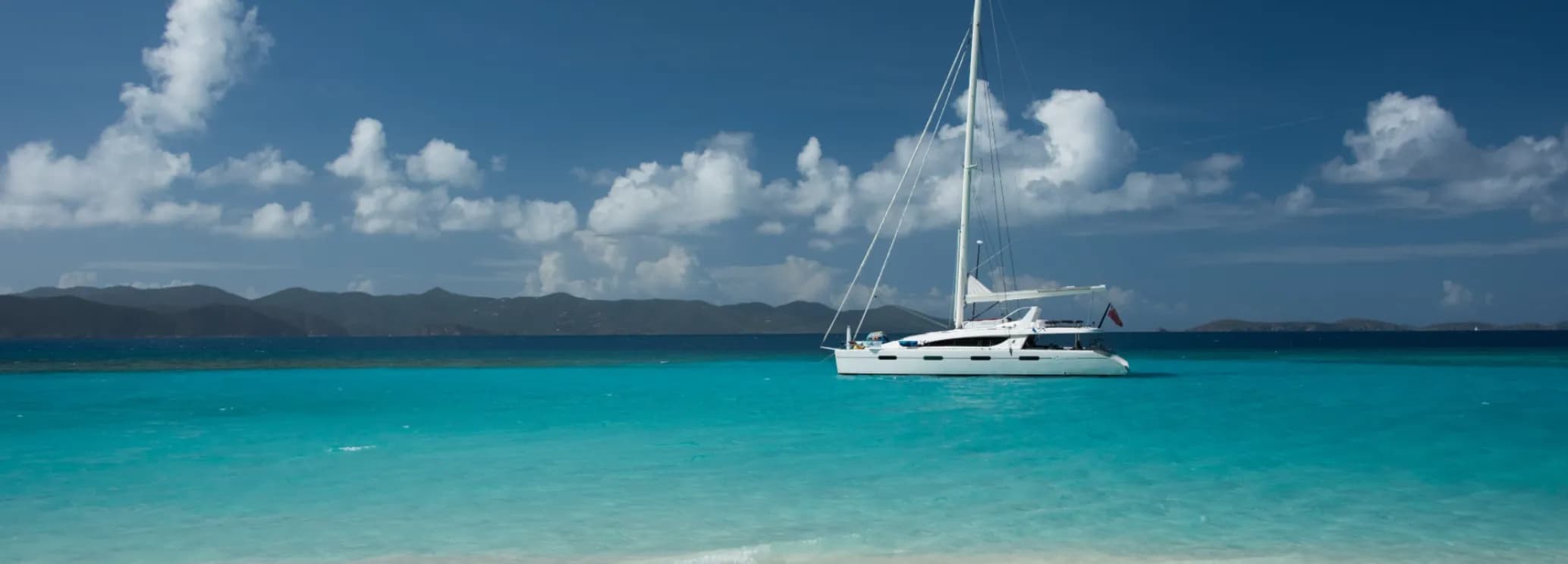
Private Jet Charter to Jost Van Dyke, British Virgin Islands
Private jet charter to Jost Van Dyke starts at $10,000+ one way via Tortola or St. Thomas, depending on departure point, aircraft category, and gateway. Jost Van Dyke has no airport, so all private jets land at Terrance B. Lettsome International (EIS / TUPJ) on Tortola or Cyril E. King (STT / TIST) in St. Thomas, followed by a private water taxi or ferry of about 15 to 45 minutes to the island. The gateway is chosen by aircraft: turboprops and light jets into Tortola, larger jets into St. Thomas. Jost Van Dyke is the smallest of the main British Virgin Islands, home of the legendary Soggy Dollar Bar and White Bay. The BVI is a foreign territory, so a passport is required for all travelers, including U.S. citizens. Hogani Jets coordinates the flight and the water transfer as one arrangement.
Jost Van Dyke is the BVI's free-spirited little island, four square miles of green hills, a handful of beach bars that are famous across the sailing world, and some of the best anchorages in the Caribbean. It has no airport, which is exactly in keeping with its character: arrival is by a short, scenic boat transfer from Tortola or St. Thomas. For private travelers it offers a rare combination, a genuinely iconic beach-bar-and-sailing destination reached privately, with the gateway chosen to fit the aircraft and the group.
The Home of White Bay and the Soggy Dollar
Jost Van Dyke is synonymous with White Bay and the Soggy Dollar Bar, the birthplace of the Painkiller cocktail, alongside Foxy's at Great Harbour, one of the most famous beach bars in the world. It is a sailing-and-beach-bar island with a laid-back, legendary reputation, drawing yacht crews and private travelers alike.
A No-Airport Island, Reached by Sea
With no runway of its own, Jost Van Dyke is an indirect-access destination: a jet into a nearby gateway and a short water taxi or ferry across. The gateway depends on the aircraft, Tortola for turboprops and light jets, St. Thomas for larger jets, and the crossing is brief, 15 to 45 minutes depending on the route.
Foreign Territory, Passport Required
The British Virgin Islands is a British Overseas Territory, and travelers, including U.S. citizens, should carry a valid passport for entry. Passengers arriving through Tortola clear BVI customs and immigration before continuing to Jost Van Dyke. Travelers arriving through St. Thomas enter the BVI by sea and complete BVI customs and immigration at an approved port of entry.
Jost Van Dyke has no airport. Private jets use Tortola or St. Thomas as the gateway, chosen by aircraft, then a short water transfer completes the trip.
Airport | ICAO / IATA | Runway | Notes |
|---|---|---|---|
Terrance B. Lettsome, Tortola (BVI GATEWAY) | TUPJ / EIS | 4,645 ft (3,957 ft LDA) | The closest gateway, on Beef Island. Short-field strip for turboprops and light jets; lands you inside the BVI. Then a 15 to 25 minute water taxi, or ferry via West End. BVI customs. See the Tortola page. |
Cyril E. King, St. Thomas (LARGER JETS) | TIST / STT | 7,000 ft (2,134 m) | The gateway for larger jets, turboprops through super midsize readily, heavy on review. Then a 25 to 45 minute water taxi to Jost Van Dyke. Note this crosses from the USVI into the BVI, so passports and BVI clearance apply. |
Jost Van Dyke is an indirect-access island: the jet lands at Tortola or St. Thomas and a water taxi or ferry completes the trip. Tortola is the closest and lands you inside the BVI, but its short runway limits aircraft to turboprops and light jets. St. Thomas takes larger jets but adds a USVI-to-BVI border crossing on the water. The gateway is matched to the aircraft and the group.
Jet clients are handled at the gateway, Tortola (Airport Services BVI / Platinum BVI) or St. Thomas (three FBOs), where customs is cleared, then transferred by sea. Hogani Jets coordinates the FBO handling, the BVI clearance, and the water taxi or ferry as a single arrival sequence.
Stage | Provider | Notes |
|---|---|---|
Jet arrival (EIS or STT) | Tortola FBOs / St. Thomas FBOs | Full handling and customs at the gateway. From Tortola the BVI is already cleared; from St. Thomas, BVI immigration is handled on arrival at Jost Van Dyke. |
Transfer to Jost Van Dyke | Private water taxi / ferry | From Tortola about 15 to 25 minutes by private boat, or ferry via West End. From St. Thomas about 25 to 45 minutes. Usually into Great Harbour or White Bay. |
Matt's Recommendation
Jost Van Dyke is the fun one, White Bay, the Soggy Dollar, Foxy's, it is a sailing legend. There is no airport, so it is always a flight into Tortola or St. Thomas and then a quick boat across. If the group is small I like Tortola on a light jet, you land right in the BVI; if it is a bigger group I take them into St. Thomas and run a fast boat over. Either way everyone needs a passport, it is the BVI.
No, because Jost Van Dyke has no airport. The journey is a two-stage arrangement: a private jet into Tortola (EIS) or St. Thomas (STT), then a private water taxi or ferry to the island. The BVI is a foreign territory, so a passport is required for all travelers, including U.S. citizens, with clearance at the gateway or on arrival.
Common Jet Routes Into the Gateways
- Miami and Fort Lauderdale: approximately 2.5 to 3 hours into St. Thomas by light, midsize, or super midsize jet, then a 25 to 45 minute boat, or via Tortola by light jet.
- New York and Teterboro: approximately 4 to 4.5 hours into St. Thomas, then transfer.
- San Juan: approximately 30 to 45 minutes by turboprop or light jet into Tortola, then a short boat, a common regional gateway leg.
- St. Thomas to Jost Van Dyke: about 25 to 45 minutes by water taxi, the direct sea leg once on the ground.
Although jets cannot land on Jost Van Dyke, the island is fully accessible through this gateway-and-transfer model. The crossing is short, and Hogani Jets times the boat to the aircraft so there is minimal wait, and handles the BVI clearance whichever gateway is used.
Jost Van Dyke has no runway, so aircraft feasibility is set by the gateway. Tortola's short field (about 3,957 ft declared) takes turboprops and light jets; St. Thomas's 7,000 ft runway takes turboprops through super midsize jets readily, with heavy jets on operational review. The gateway is chosen to match the aircraft, then the water transfer completes the trip.
Aircraft Feasibility by Gateway
Aircraft Category | Passengers | Gateway | Operational Notes |
|---|---|---|---|
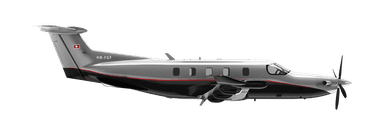
Executive Turboprop | 4–10 | Tortola or St. Thomas | King Air 350, Pilatus PC-12. Can use either gateway; Tortola lands inside the BVI. |
Light Jet | 6–9 | Tortola or St. Thomas | Citation CJ3, Phenom 300. Feasible into Tortola's short field, or via St. Thomas. |
Midsize Jet | 8–9 | St. Thomas | Citation XLS+, Hawker 800XP. Via St. Thomas; Tortola only payload-managed. |
Super Midsize Jet | 8–10 | St. Thomas | Challenger 350, Gulfstream G280. Via St. Thomas, then water taxi. |
Heavy Jet | 12–19 | St. Thomas, on review | Gulfstream G450. Into St. Thomas on operational review, then transfer. |
The gateway choice is the heart of a Jost Van Dyke trip. Turboprops and light jets can land at Tortola and clear straight into the BVI; midsize and larger jets use St. Thomas and cross by water. Hogani Jets matches the gateway to the aircraft and the group. Passenger figures shown are maximum capacity; typical configurations carry fewer.
Transfer Logistics and Arrival Planning
A Jost Van Dyke trip is a two-stage operation with the timing between aircraft arrival and boat departure the key factor. Pre-departure documentation, the BVI passport requirement, customs, and the water transfer are coordinated ahead of each flight through the Part 135 operators Hogani Jets works with.
- A valid passport is mandatory for all travelers, including U.S. citizens; the BVI is a foreign territory with its own customs and immigration.
- Via Tortola, BVI clearance is at EIS and the boat is a short 15 to 25 minute hop; via St. Thomas, BVI immigration is handled on arrival at Jost Van Dyke after a 25 to 45 minute crossing.
- The gateway is matched to the aircraft, a light jet to Tortola or a larger jet to St. Thomas, then the boat timed to the arrival.
- Arrival is usually into Great Harbour or White Bay, often directly to a dock near the resort or villa.
Aircraft are selected for the jet leg into the chosen gateway. Cruise speed is included below as a planning reference. Turboprops and light jets can use Tortola; midsize and larger jets use St. Thomas.
Category | Example Aircraft | Passengers | Cruise Speed | Gateway | Recommended Use |
|---|---|---|---|---|---|
Turboprop | King Air 350, Pilatus PC-12 | 4–10 | ~311-357 mph | Tortola or St. Thomas | Regional legs; Tortola lands in the BVI |
Light Jet | Citation CJ3, Phenom 300 | 6–9 | ~480-521 mph | Tortola or St. Thomas | Small groups; direct BVI arrival via Tortola |
Midsize Jet | Citation XLS+, Hawker 800XP | 8–9 | ~506-514 mph | St. Thomas | East Coast routes, then water taxi |
Super Midsize | Challenger 350, Gulfstream G280 | 8–10 | ~516-541 mph | St. Thomas | Larger groups via St. Thomas |
Common aircraft and cruise speeds: the King Air 350 (turboprop, ~357 mph / 310 ktas) can use either gateway. The Citation CJ3 (light jet, up to 6 passengers, ~480 mph / 417 ktas) is feasible into Tortola's short field for a direct BVI arrival, or via St. Thomas. The Citation XLS+ (midsize jet, up to 9 passengers, ~506 mph / 440 ktas) routes via St. Thomas, then a water taxi. The Challenger 350 (super midsize jet, up to 10 passengers, ~541 mph / 470 ktas) handles larger groups into St. Thomas, then the crossing.
Because the jet lands at a gateway and passengers cross by water, aircraft choice is tied to the gateway. A small group on a light jet can land at Tortola and clear into the BVI directly; a larger group uses St. Thomas. Hogani Jets coordinates the flight, the BVI clearance, and the boat as one sequence.
Jost Van Dyke traffic is a jet to Tortola or St. Thomas plus a short water transfer. The mainland leg is led by South Florida and the East Coast; regional legs come from San Juan and St. Thomas.
Route | Distance | Flight Time | Best Option |
|---|---|---|---|
St. Thomas (TIST) to Jost Van Dyke | ~12 mi by sea | ~25 to 45 min boat | Water taxi, once on the ground |
Tortola (EIS) to Jost Van Dyke | ~8 mi by sea | ~15 to 25 min boat | Water taxi or ferry via West End |
San Juan to Tortola, then Jost Van Dyke | ~110 mi / 96 nm | ~45 to 60 min + boat | Turboprop or Light Jet to EIS, then boat |
Miami to St. Thomas, then Jost Van Dyke | ~1,100 mi / 956 nm | ~2h 30m to 3h + boat | Jet to STT, then water taxi |
New York to St. Thomas, then Jost Van Dyke | ~1,610 mi / 1,400 nm | ~4h to 4.5h + boat | Jet to STT, then water taxi |
Private jet charter to Jost Van Dyke starts at $10,000+ one way on shorter regional routes. From South Florida, pricing varies by departure airport, aircraft category, and whether the flight uses Tortola or St. Thomas as the gateway. Regional turboprop legs via Tortola are lower. All prices are starting points; the final quote reflects the specific aircraft, route, and transfer.
Route | Aircraft | One-Way Price | Passengers | Flight Time |
|---|---|---|---|---|
San Juan to JVD (via Tortola) | Turboprop / Light Jet | $10,000+ | Up to 10 | ~45 to 60 min + boat |
Miami to JVD (via St. Thomas) | Midsize / Super Midsize | $22,000+ | Up to 10 | ~2h 30m to 3h + boat |
New York to JVD (via St. Thomas) | Super Midsize / Heavy | $38,000+ | Up to 19 | ~4h to 4.5h + boat |
Prices reflect standard one-way charter starting rates into the gateway including flight time, repositioning, fuel, crew, taxes, and BVI international handling fees. The water taxi or ferry to Jost Van Dyke is coordinated separately. Final pricing depends on the specific aircraft, date, and availability.
Contact Hogani Jets at charter@hoganijets.com or +1-855-660-0573 for a current quote.
Hourly Charter Rates by Aircraft Category
One-way charter prices include flight time plus repositioning, fuel, crew, taxes, and handling for the jet leg into the gateway. The hourly rates below show the underlying cost per flight hour for each aircraft category.
Aircraft Category | Hourly Rate | Example Aircraft |
|---|---|---|
Turboprop | $1,100 – $2,300/hr | King Air 350, Pilatus PC-12 |
Light Jet | $2,300 – $3,800/hr | Citation CJ3, Phenom 300 |
Midsize Jet | $2,800 - $5,500/hr | Citation XLS+, Hawker 800XP |
Super Midsize Jet | $4,500 - $7,000/hr | Challenger 350, Gulfstream G280 |
Heavy Jet | $5,500 - $8,000/hr | Gulfstream G450, Challenger 605 |
Pricing Factors Specific to Jost Van Dyke
- Every trip carries a jet charter into a gateway plus a separate water taxi or ferry, a two-cost structure unique to no-airport islands.
- The gateway choice affects cost: Tortola lands inside the BVI on a light jet, while St. Thomas takes larger jets but adds a longer water crossing.
- BVI international handling and customs fees apply as a foreign territory.
- Peak BVI winter and sailing season tightens both aircraft and boat-transfer capacity; book earlier in these windows.
Jost Van Dyke operates year-round, with the BVI sailing season, beach-bar scene, and weather shaping demand.
- Peak season (December through April): Best weather and prime sailing and beach-bar conditions. Book 3 to 5 weeks ahead, more for the holidays and New Year, when Foxy's Old Year's Night is legendary.
- Sailing season: Strong winter demand across the BVI; confirm dates and book early around events and holidays.
- Shoulder season (May and November): Favorable conditions with pricing below peak and better availability.
- Hurricane season (June through October): Caribbean weather risk, particularly August and September. Sea transfers are weather-sensitive, so flexibility matters.
This guide is written for travelers arriving by private charter. The focus is on the arrival sequence, where to stay, and the beach bars and anchorages that define Jost Van Dyke.
Where to Stay on Jost Van Dyke
Jost Van Dyke is a small, low-key island with intimate guesthouses, villas, and the yachts anchored offshore rather than large resorts. The options below are the main on-island choices for charter clients.
Option | Setting | Category | Notes |
|---|---|---|---|
White Bay | Villa / Cottage | Beachfront and hillside villas above the famous White Bay, the premium way to stay, steps from the Soggy Dollar. Hogani Jets refers trusted BVI villa partners. | |
Great Harbour guesthouses | Great Harbour | Guesthouse | Small, characterful guesthouses near Foxy's and the main settlement, simple and authentic, at the social heart of the island. |
Offshore anchorages | Yacht | For many visitors the classic option, a yacht anchored off White Bay or Great Harbour. Hogani Jets coordinates the flight and transfer to the marina or anchorage. |
Jost Van Dyke is a villa-and-yacht island, not a resort one, White Bay villas are the premium stay, Great Harbour the authentic guesthouse base, and a chartered yacht the classic choice. The low-key character is the appeal. Hogani Jets coordinates the flight and the water transfer to the dock or anchorage.
Places to Visit on Jost Van Dyke
The following spots are the most requested by visitors.
- White Bay and the Soggy Dollar Bar: The island's signature beach, with powder sand and the legendary bar that invented the Painkiller, reached by swimming ashore from the anchorage.
- Great Harbour and Foxy's: The main settlement and one of the most famous beach bars in the world, the heart of the island's social scene.
- Bubbly Pool: A natural rock pool on the north shore that fizzes with incoming surf, a short hike across the island.
- Sandy Spit and Sandy Cay: Tiny, picture-perfect islets just offshore, classic day-anchorage stops.
- Little Harbour: A quieter anchorage with a handful of local restaurants, a calmer alternative to Great Harbour.
Activities That Affect Flight Planning
- Scuba diving and snorkeling: FAA recommends a 24-hour interval between diving and flying. Schedule dive days at least 24 hours before the departure flight.
- Sailing and yacht charters: Multi-day trips should be planned around the departure with a buffer day and time for the transfer back to the gateway.
- Beach-bar and island days: No flight planning impact, but allow for the water transfer to the gateway on departure day.
Practical Considerations
The British Virgin Islands uses the U.S. dollar, so no currency exchange is required, but it is a foreign territory: a passport is mandatory for all travelers, including U.S. citizens, with BVI customs and immigration. The island is small and lightly serviced, with limited supplies and basic medical facilities; serious cases are transferred to Tortola, St. Thomas, or beyond. Much of the experience is reached by sea, so boat transfers are part of the trip.
Matt's Recommendation
Jost Van Dyke is pure fun, White Bay, the Soggy Dollar, Foxy's at Great Harbour, it is a bucket-list island for anyone who loves the BVI. There is no airport, so it is always a flight into Tortola or St. Thomas and a boat across. For a small group I love putting them on a light jet straight into Tortola, because then you are already cleared into the BVI and it is a fifteen-minute boat. For a bigger group I fly into St. Thomas and run a fast boat over, about half an hour. The one thing I am always firm on: it is the BVI, a foreign country, so everyone needs a passport, even my American clients, no exceptions. And if New Year is the plan, book early, Foxy's Old Year's Night is one of the great parties in the Caribbean.
Hogani Jets coordinates all private jet charters through licensed Part 135 operators. Hogani Jets does not operate the aircraft directly. Every charter is conducted by a licensed Part 135 direct air carrier whose crew, maintenance, and operations remain under that carrier's independent operational control, with certifications and safety records reviewed as part of every booking.
Contact Hogani Jets at charter@hoganijets.com or +1-855-660-0573 to plan a Jost Van Dyke charter or BVI sailing itinerary.
Reviewed by Matt Hogan — Founder, Hogani Jets & Aviation Specialist.
Can private jets land directly in Jost Van Dyke?
No. Jost Van Dyke does not have an airport. Private charter passengers typically arrive through Tortola (EIS) or St. Thomas (STT), then continue to the island by private water taxi or ferry, with the transfer generally taking about 15 to 45 minutes.
Which airport is used for private jet travel to Jost Van Dyke?
Turboprops and light jets use Terrance B. Lettsome (EIS) on Tortola, which lands you inside the BVI; larger jets use Cyril E. King (STT) in St. Thomas. The gateway is chosen by aircraft, then a water transfer completes the trip.
How do you get from the airport to Jost Van Dyke?
After landing at Tortola or St. Thomas, passengers transfer by private water taxi or ferry. From Tortola it is about 15 to 25 minutes, and from St. Thomas about 25 to 45 minutes, usually into Great Harbour or White Bay.
How much does a private charter to Jost Van Dyke cost?
Private charter to Jost Van Dyke starts at $10,000+ one way for regional turboprop flights from San Juan via Tortola. From South Florida, light or midsize jet charters via St. Thomas start at approximately $16,000+, while flights from New York can start at $38,000+. Final pricing depends on the departure point, aircraft category, travel date, positioning, and availability.
Can heavy jets fly to Jost Van Dyke?
Not directly, since there is no airport. Heavy jets operate into St. Thomas on operational review for the approach, and passengers then continue by water taxi to Jost Van Dyke.
Do I need a passport to fly private to Jost Van Dyke?
Yes. The British Virgin Islands is a foreign territory, so a valid passport is required for all travelers, including U.S. citizens, unlike the neighbouring U.S. Virgin Islands. Customs is cleared at the gateway or on arrival.
What aircraft are best for Jost Van Dyke routes?
Turboprops and light jets can use Tortola for a direct BVI arrival; midsize, super midsize, and heavy jets use St. Thomas, then a water taxi. Hogani Jets matches the gateway and aircraft to the group and route.
How long is a private flight from Miami to Jost Van Dyke?
A private jet from Miami to St. Thomas takes about 2.5 to 3 hours, followed by a 25 to 45 minute water taxi to Jost Van Dyke. Via Tortola on a light jet, the boat is shorter at 15 to 25 minutes.
Why is Jost Van Dyke popular?
Jost Van Dyke is home to White Bay and the Soggy Dollar Bar, the birthplace of the Painkiller, and Foxy's at Great Harbour, one of the world's most famous beach bars. It is a legendary sailing-and-beach-bar island with a laid-back character.
Is Hogani Jets a direct air carrier?
No. Hogani Jets is an air charter broker and does not own or operate aircraft. All charters are facilitated through licensed Part 135 direct air carriers who maintain full operational control and regulatory compliance for every flight.
Last Updated: 25 Sep 2026, 09:41 AM
About Us
Hogani Jets was built on a simple belief: real luxury is quiet, personal, and effortless. We work with a curated list of operators and a small client base so we can give every journey the attention it deserves.
Instant Charter Estimate


Compare Aircraft
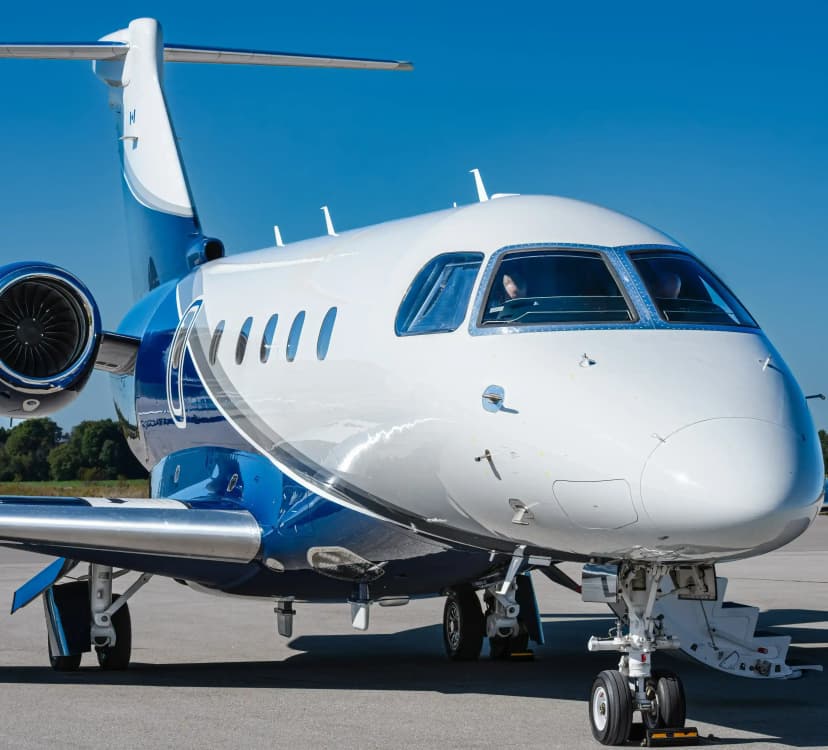
Compare private jet categories side by side, range, cabin, passenger capacity, and hourly cost to find the right aircraft for your mission and route.
Your Guide: Hogani Jets Uncensored
Hogani Jets Uncensored: Submit your details for your free guide to private jet programs, honest truths, pricing and more.
