
How High Do Private Jets Fly?
Private jets charter at $2,800 to $13,000 per hour and cruise at 41,000 to 45,000 feet far above commercial airliners at 30,000 to 38,000 feet. Ultra-long-range jets are certified to 51,000 feet. Commercial airliners cruise at 30,000 to 38,000 feet. The altitude advantage allows private jets to fly above most weather, avoid commercial air traffic congestion, and access more direct routing. Light jets: 35,000 to 41,000 feet. Super midsize jets: 41,000 to 45,000 feet. Ultra-long-range jets: up to 51,000 feet. Turboprops: 25,000 to 31,000 feet.
Private jets fly higher than commercial airliners. This is not a minor technical detail. It affects turbulence, routing, fuel efficiency, and total flight time in ways that matter directly to the passenger experience.
Understanding private jet altitude starts with the distinction between service ceiling (the maximum certified altitude an aircraft can reach) and typical cruising altitude (where it actually operates on most missions).
| Aircraft Type | Typical Cruise Altitude | Service Ceiling |
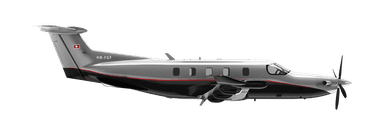
| Turboprop (King Air, Pilatus PC-12) | 25,000 to 31,000 feet | 31,000 to 35,000 feet |
| Light Jet (Phenom 300, Citation CJ4) | 35,000 to 41,000 feet | 45,000 feet |
| Midsize Jet (Citation XLS, Hawker 900) | 37,000 to 43,000 feet | 45,000 feet |
| Super Midsize (Challenger 350, G280) | 41,000 to 45,000 feet | 45,000 feet |
| Heavy Jet (Challenger 650, Global 6000) | 41,000 to 47,000 feet | 51,000 feet |
| Ultra Long Range (G650ER, Global 7500) | 43,000 to 51,000 feet | 51,000 feet |
| Commercial Narrowbody (Boeing 737, A320) | 30,000 to 38,000 feet | 41,000 feet |
| Commercial Widebody (Boeing 777, A350) | 33,000 to 42,000 feet | 43,000 feet |
Private jets operating at 41,000 to 45,000 feet fly above 90 percent of weather systems and well clear of the commercial air traffic bands that carry the Boeing 737 and A320 fleets. At this altitude, the airspace is less congested, routing is more direct, and turbulence is significantly less common. An ultra-long-range jet at 51,000 feet clears virtually all weather and commercial traffic entirely. That translates to faster routing, smoother flights, and more productive time in the air.Private jets operating at 41,000 to 45,000 feet fly above 90 percent of weather systems and well clear of the commercial air traffic bands that carry the Boeing 737 and A320 fleets. At this altitude, the airspace is less congested, routing is more direct, and turbulence is significantly less common. An ultra-long-range jet at 51,000 feet clears virtually all weather and commercial traffic entirely. That translates to faster routing, smoother flights, and more productive time in the air.
Commercial airliners are optimized for high-density, high-frequency operations. The Boeing 737 and Airbus A320 family carries 150 to 200 passengers and operates within the 30,000 to 38,000 foot band where air traffic control sequencing is most efficient at scale.
Private jets carry 4 to 19 passengers and do not share the same air traffic management constraints. They can request and receive higher flight levels that commercial aircraft cannot be assigned at the same frequency.
Engine and aerodynamic design also differs. The Gulfstream G650ER and Bombardier Global 7500 are certified to 51,000 feet. The Boeing 737 MAX is certified to 41,000 feet. The difference reflects the design priorities of each aircraft.
Service ceiling is the maximum altitude at which an aircraft maintains a specified rate of climb, typically 100 feet per minute. It is the ceiling an aircraft is certified to reach. It does not mean the aircraft operates there routinely.
Typical cruise altitude is determined by route length, aircraft weight, weather, and air traffic control. A light jet certified to 45,000 feet may cruise at 37,000 feet on a 30-minute regional sector because the climb and descent phases would consume most of the flight time at that altitude. The same aircraft on a 3-hour sector would step up to 41,000 or 43,000 feet as fuel burns off and the aircraft becomes lighter.
Pilots step up to higher altitudes progressively during long flights. As fuel weight decreases, the aircraft can climb to optimal cruise altitude for fuel efficiency and range.
Less turbulence: Turbulence is primarily a weather and atmospheric phenomenon at lower altitudes. Most commercial turbulence occurs below 35,000 feet. Private jets operating at 41,000 to 51,000 feet fly above most weather systems that cause passenger discomfort.
Better fuel efficiency: At higher altitudes, air density is lower. Less air means less drag on the aircraft. Less drag means the engines work less hard, burning less fuel per nautical mile. This is why aircraft step up to higher altitudes as fuel burns off. The reduced drag at cruise altitude is a meaningful efficiency factor.
More direct routing: Commercial air traffic is densest between 30,000 and 38,000 feet. Private jets flying above this band can take more direct routes not available to commercial traffic. On transcontinental sectors, the combined effect of direct routing and lower drag meaningfully reduces total flight time.
Clearer communication and navigation: Higher altitudes provide longer line-of-sight for radio communication and improved satellite navigation signal quality.
CABIN ALTITUDE AND PASSENGER COMFORT
Cabin altitude is the simulated elevation the pressurization system maintains inside the aircraft while cruising at 40,000 to 51,000 feet. Most heavy jets maintain a cabin altitude of 6,000 to 8,000 feet. The Bombardier Global 7500 maintains approximately 4,850 feet at cruise. The Global 8000 achieves 2,691 feet, the lowest of any business jet in production. Lower cabin altitude means more oxygen, less dehydration, and less passenger fatigue on long flights. On a 14-hour sector, the difference between a 6,000-foot and a 2,900-foot cabin altitude is measurable on arrival.
| Aircraft Model | Service Ceiling | Notes |
| Cessna Citation CJ4 (Light Jet) | 45,000 feet | Standard for modern light jets |
| Embraer Phenom 300 (Light Jet) | 45,000 feet | Most widely chartered light jet globally |
| Bombardier Challenger 350 (Super Midsize) | 45,000 feet | Covers every US city pair nonstop |
| Gulfstream G280 (Super Midsize) | 45,000 feet | High-speed option in super midsize class |
| Bombardier Challenger 650 (Heavy Jet) | 41,000 feet | Cabin altitude of 5,800 feet at cruise |
| Gulfstream G650ER (Ultra Long Range) | 51,000 feet | Typical cruise 41,000 to 43,000 feet |
| Bombardier Global 7500 (Ultra Long Range) | 51,000 feet | Cabin altitude approximately 4,850 feet at cruise |
| Gulfstream G700 (Ultra Long Range) | 51,000 feet | Lowest cabin altitude in its class at cruise |
Aircraft weight at departure: A fully loaded aircraft climbs to a lower initial cruise altitude than a lightly loaded one. As fuel burns and weight decreases, the aircraft steps up to higher altitudes.
Route length: Short sectors under 500 miles do not justify climbing to 43,000 feet because descent would begin almost immediately. Pilots optimize cruise altitude to the sector length.
Air traffic control: Assigned flight levels are not always the optimal altitude for the aircraft. ATC may hold aircraft lower due to traffic separation requirements.
Weather: Severe weather cells or jet stream avoidance may require altitude changes from the planned cruise level.
Most private jets in the Hogani Jets network cruise between 37,000 and 45,000 feet on domestic US routes. Ultra-long-range aircraft for international sectors cruise at 41,000 to 51,000 feet. Altitude specifications are confirmed for any aircraft presented to clients at the time of booking.
Contact Hogani Jets at charter@hoganijets.com or +1-855-660-0573. All charters are facilitated through licensed Part 135 direct air carriers who hold full operational control and regulatory compliance for every flight.
Reviewed by Matt Hogan — Founder, Hogani Jets & Aviation Specialist.
How high do private jets fly compared to commercial planes?
Private jets typically cruise at 41,000 to 45,000 feet. Ultra-long-range jets reach 51,000 feet. Commercial airliners cruise at 30,000 to 38,000 feet for narrowbodies and up to 42,000 feet for widebodies. Private jets fly 3,000 to 16,000 feet higher than most commercial traffic.
What is the service ceiling of a private jet?
Service ceiling varies by aircraft category. Light jets and super midsize jets are certified to 45,000 feet. Heavy jets and ultra-long-range jets are certified to 51,000 feet. Turboprops reach 31,000 to 35,000 feet. Service ceiling is the maximum certified altitude, not the typical operating altitude.
Why do private jets fly at higher altitudes?
Higher altitude means less air density, which reduces aerodynamic drag and improves fuel efficiency. Higher altitude also places private jets above most commercial air traffic and weather systems, enabling more direct routing and smoother flights with less turbulence.
What altitude does a Gulfstream G650ER cruise at?
The Gulfstream G650ER has a service ceiling of 51,000 feet and typically cruises between 41,000 and 43,000 feet on most missions. It operates in airspace that is largely clear of commercial traffic and most weather systems.
What is cabin altitude and why does it matter?
Cabin altitude is the simulated elevation the pressurization system maintains inside the aircraft. Most jets maintain 6,000 to 8,000 feet cabin altitude at cruise. Lower cabin altitude (the Global 7500 achieves 4,850 feet) means more oxygen, less dehydration, and less passenger fatigue on long flights.
Do private jets fly higher than the weather?
At 41,000 to 51,000 feet, private jets fly above most weather systems that cause turbulence and passenger discomfort. Most commercial turbulence occurs below 35,000 feet. Ultra-long-range jets at 51,000 feet clear virtually all weather and commercial traffic.
What is the difference between service ceiling and cruise altitude?
Service ceiling is the maximum certified altitude an aircraft can reach. Cruise altitude is where it actually operates on a given flight. A jet certified to 45,000 feet may cruise at 37,000 feet on a short sector because the climb and descent would consume most of the flight at peak altitude.
Can private jets fly at 50,000 feet?
Some ultra-long-range private jets are certified to 51,000 feet. The Gulfstream G650ER, Gulfstream G700, Bombardier Global 7500, and Bombardier Global 8000 all have service ceilings of 51,000 feet. Operating at that altitude requires specific aircraft type ratings and cabin pressurization certification.
How does altitude affect fuel efficiency on private jets?
Higher altitude means thinner air and less aerodynamic drag. Less drag means the engines burn less fuel per nautical mile at cruise speed. Aircraft step up to higher altitudes as fuel burns off during flight, progressively improving fuel efficiency as the mission continues.
How high do small private jets fly?
Small private jets, such as very light and light jets, typically cruise between 41,000 and 45,000 feet. Turboprops operate lower, usually cruising between 25,000 and 35,000 feet.
Does Hogani Jets confirm cruise altitude for charter bookings?
Altitude specifications for any aircraft in the Hogani Jets network are confirmed at booking. Hogani Jets coordinates charter through licensed Part 135 direct air carriers who hold full operational control for every flight. Contact charter@hoganijets.com or +1-855-660-0573.
Last Updated: 21 Sep 2026, 04:10 PM
About Us
Hogani Jets was built on a simple belief: real luxury is quiet, personal, and effortless. We work with a curated list of operators and a small client base so we can give every journey the attention it deserves.
Instant Charter Estimate


Compare Aircraft
Compare private jet categories side by side, range, cabin, passenger capacity, and hourly cost to find the right aircraft for your mission and route.
Your Guide: Hogani Jets Uncensored
Hogani Jets Uncensored: Submit your details for your free guide to private jet programs, honest truths, pricing and more.
