
How to Choose the Right Private Jet: 5-Step Selection Guide
Choosing the right private jet size requires matching your passenger count and route distance to one of five core aircraft categories. Very Light Jets and Light Jets efficiently carry 4 to 8 passengers on regional flights under 3 hours. Midsize and Super-Midsize jets accommodate 7 to 10 passengers with stand-up cabins for transcontinental routes up to 7 hours. Heavy and Ultra-Long-Range jets carry 12 to 19 passengers on intercontinental flights exceeding 12 hours. Hogani Jets recommends selecting the smallest aircraft category that clears your maximum passenger count and nonstop range requirements to maximize budget efficiency.
Choosing the wrong aircraft size is the most common mistake in private charter. Two errors happen in opposite directions.
Under-sizing means booking a light jet for a coast-to-coast route and discovering mid-booking that a fuel stop adds 90 minutes and $2,500. Or booking a super midsize for 12 passengers and finding the cabin is too small.
Over-sizing means paying for a heavy jet at $12,000/hr when a super midsize at $9,000/hr covers 10 passengers and 3,500 nm with the same comfort. At $3,000/hr difference over 7 hours, the mistake costs $21,000.
The five-step framework below eliminates both errors by filtering systematically from the largest constraint inward.
Passenger count is the first filter. It sets the minimum aircraft category and cannot be bypassed. An aircraft that cannot physically accommodate your group is the wrong aircraft regardless of all other factors.
| Passenger Count | Minimum Category | Why This Category | Example Aircraft |
| 1-4 | Turboprop or VLJ | Smallest available; lowest cost for small groups | King Air 350, HondaJet Elite II |
| 5-8 | Light Jet or above | Turboprops and VLJs too small for 5+ comfortably | Citation XLS, Hawker 750 |
| 8-10 | Super Midsize or above | First full stand-up category; conference seating | Challenger 350, Praetor 600 |
| 10-16 | Heavy Jet or above | Walk-around cabin; flight attendant standard | Challenger 650, Falcon 900 |
| 12-19 | ULR or VIP Airliner | Maximum for purpose-built private jets | Gulfstream G700, Global 7500 |
| 20-50 | VIP Airliner | Requires commercial platform with bespoke completion | ACJ319/neo, ACJ320/neo, BBJ |
| 50-100 | Large VIP Airliner | Only widebody VIP airliners reach this capacity | ACJ330/neo, Boeing 747-8 VIP |
| 120+ | Group Charter Aircraft | Commercial seating; A320, Boeing 737, Embraer 195 | Airbus A320, Boeing 737 |
Important: passenger count in the table refers to the number that can fly comfortably, not the aircraft's maximum certified capacity. A Citation XLS certified for 9 passengers is uncomfortable with 9; 6-7 is the practical comfortable maximum.
After passenger count sets the minimum category, route distance may push you to a higher category. An aircraft that fits your group but cannot reach your destination nonstop is the wrong aircraft.
| Route Distance (nm) | Minimum Range Category | Benchmark Route | What Happens Below This Category |
| Under 500 nm | Turboprop or VLJ | NYC to DC (205 nm) | Any category works; turboprop is lowest cost |
| 500-1,500 nm | Light Jet or above | NYC to Miami (1,280 nm) | Turboprop/VLJ out of range; fuel stop required |
| 1,500-2,500 nm | Midsize Jet or above | NYC to Denver (1,770 nm) | Light jet borderline; may need fuel stop |
| 2,000-2,500 nm | Super Midsize or above | NYC to LA (2,450 nm) | Midsize needs fuel stop; super midsize clears it |
| 3,000-4,000 nm | Heavy Jet or above | NYC to London (3,450 nm) | Super midsize cannot reach London nonstop |
| 4,000-6,000 nm | ULR Jet | NYC to Dubai (6,800 nm) | Heavy jet needs fuel stop on this routing |
| 6,000+ nm | ULR or Widebody VIP | LA to Sydney (7,488 nm) | Only ULR and widebody VIP airliners qualify |
When route distance pushes you above the category set by passenger count, use the higher category. Never sacrifice range to save money. A fuel stop costs time, airport fees ($500-2,500), and crew time that often exceeds the hourly savings from a smaller aircraft.
Cabin experience determines whether you need a stand-up cabin, sleeping capability, or specific meeting configurations. This filter can push you above the category set by steps 1 and 2.
| Cabin Requirement | Minimum Category | Why This Matters |
| Seated travel only; under 3 hours | Light Jet or above | No stand-up needed; cabin height not critical |
| Near stand-up (5.5-6 ft); 3-5 hours | Midsize Jet or above | Most passengers comfortable; enclosed lavatory |
| Full stand-up (6+ ft); any duration | Super Midsize or above | First category with guaranteed full stand-up |
| Walk-around cabin; multiple zones | Heavy Jet or above | Separate meeting, dining, and rest zones |
| Flat-bed sleeping; 6+ hour flight | Heavy Jet or above | Most heavy jets have flat or near-flat berths |
| Dedicated bedroom/stateroom | ULR Jet or above | Full private bedroom; standard on top ULR jets |
| Multiple bedrooms; full two decks | VIP Airliner or A380 | Only VIP airliners provide residential-scale interiors |
The most common mis-selection on this step: booking a midsize jet for a 7-hour overnight transatlantic flight. Midsize jets have a 5.5-6 ft ceiling and no flat-bed sleeping. A heavy jet at the same passenger count delivers a fundamentally different experience on a long night flight. The hourly premium is $3,000-7,000 but the comfort difference is significant.
Larger aircraft need longer runways. This filter can eliminate otherwise correct aircraft categories if your departure or destination airport is too small or short.
| Aircraft Category | Typical Min Runway | Airport Access Notes |
| Turboprop | 2,500-3,500 ft | Broadest access; most grass and gravel strips acceptable |
| VLJ / Light Jet | 3,500-4,500 ft | Most small regional airports; limited by weight |
| Midsize Jet | 4,500-5,500 ft | Most regional commercial airports |
| Super Midsize | 5,000-6,500 ft | All major commercial airports; some regional |
| Heavy Jet | 6,000-7,500 ft | Major airports only; some FBOs restricted by ramp size |
| Ultra-Long-Range | 7,000-8,000 ft | Major international airports; MTOW limitations apply |
| VIP Airliner | 8,000-12,000 ft | Major international airports only; heavy aircraft permits |
| Group Charter (A320/737) | 7,000-10,000 ft | Commercial airports only; no FBO alternatives |
Airports that are worth specific attention: Aspen (KASE) has a 7,004 ft runway with a significant altitude and terrain challenge: not all heavy jets are approved. East Hampton (KHTO) is 4,255 ft, so super midsize and above cannot land. St Barths (TFFJ) is 2,133 ft, and only turboprops and specific light jets are certified. Confirm airport suitability with Hogani Jets before booking for any destination with runway or altitude constraints.
Budget is the final filter. After steps 1-4 identify the correct category, budget confirms whether the right aircraft is financially feasible or whether mission parameters need adjustment.
| Category | Hourly Rate | NYC to LA(2,450 nm, ~5.25 hrs) | NYC to London(3,450 nm, ~7 hrs) |
| Turboprop | $1,100-$1,900/hr | Not enough range | Not enough range |
| VLJ / Light Jet | $2,000-$3,500/hr | Fuel stop required | Not enough range |
| Midsize Jet | $3,500-$5,000/hr | Fuel stop required | Not enough range |
| Super Midsize | $4,500-$7,000/hr | $39,375-$55,000 | Fuel stop required |
| Heavy Jet | $5,500-$8,000/hr | $47,250-$64,000 | $63,000-$95,000 |
| Ultra-Long-Range | $9,500-$20,000/hr | $47,250-$80,500 | $68,000-$110,000 |
| VIP Airliner | $10,000-$60,000/hr | Applicable | Applicable |
If the category required by steps 1-4 exceeds your budget, there are four adjustments: reduce passenger count to allow a smaller category, accept a fuel stop to use a shorter-range aircraft, adjust the route to one within a lower category's range, or use an empty leg on the target aircraft at 25-75% discount. Contact Hogani Jets to explore all four options before changing your travel plans.
Apply all five steps in sequence. The correct aircraft satisfies the highest requirement across all five variables simultaneously. The table below shows the output for common mission types.
| Mission | Pax | Distance | Cabin Need | Airport | Budget | Right Category |
| NYC to DC business day trip | 2-4 | 205 nm | Seated | Any | Low | Turboprop or VLJ |
| NYC to Miami family weekend | 4-6 | 1,280 nm | Comfort | Major | Medium | Light Jet |
| NYC to Aspen ski trip | 4-8 | 1,680 nm | Baggage, comfort | KASE approved | Medium | Midsize Jet |
| NYC to LA team meeting | 8-10 | 2,450 nm | Stand-up | Major | Medium-high | Super Midsize |
| NYC to London executive | 6-10 | 3,450 nm | Sleep, meeting | Major intl | High | Heavy Jet |
| NYC to Dubai intercontinental | 4-8 | 6,800 nm | Bedroom, zones | Major intl | Premium | ULR Jet |
| Corporate retreat (40 pax) | 40 | 3,000 nm | VIP completion | Major intl | Premium | ACJ320/neo |
| Sports team (80 pax, gear) | 80 | 1,500 nm | Commercial ok | Commercial | Medium | Group Charter E195 |
| Conference circuit (150 pax) | 150 | 2,000 nm | Commercial | Commercial | Medium | Group Charter A320 |
These are the errors Hogani Jets advisors see most frequently. Each one is avoidable.
Mistake 1: Booking a Light Jet for a Route That Needs a Midsize
Coast-to-coast US routes (2,450 nm) require a super midsize jet or above for nonstop capability. Light jets at 1,500-2,500 nm maximum range need a fuel stop on this routing. The stop adds 90 minutes, $1,500-2,500 in airport fees, and schedule risk. Upgrading to a super midsize at $2,000-5,000/hr more costs less than the total time and fee impact of the stop.
Mistake 2: Booking a Heavy Jet When a Super Midsize Is Sufficient
For 8-10 passengers on a transatlantic route that is within super midsize range, a super midsize at $7,500-12,000/hr saves $1,500-7,000/hr compared to a heavy jet. On a 7-hour transatlantic, that is $10,500-49,000 in avoidable cost. Confirm the route distance before assuming a heavy jet is required.
Mistake 3: Ignoring Airport Constraints
Booking an aircraft that cannot land at the destination wastes the entire charter investment. East Hampton (KHTO), St Barths (TFFJ), and Aspen (KASE) all have restrictions that eliminate most midsize and larger jets. Confirm aircraft certification at your departure and destination airports before finalizing the booking.
Mistake 4: Confusing Published Range With Practical Range
Published range assumes a standard passenger load at optimal cruise with reserve fuel. A fully loaded aircraft with maximum baggage, flying into a 100-knot headwind on a transatlantic route, has meaningfully less practical range. Add a 10-15% safety buffer when planning routes near any aircraft's published maximum range.
Mistake 5: Not Checking Cabin Height for Long Flights
A midsize jet with a 5.75-foot ceiling is uncomfortable on a 7-hour transatlantic flight. Booking the smallest aircraft category that meets passenger count and range without checking cabin height creates a poor experience on long sectors. For flights over 4 hours, a full stand-up cabin (6+ ft) is worth the category upgrade.
Mistake 6: Overlooking Peak Season Availability
The right aircraft category at the wrong time is unavailable. Super midsize jets on East Coast to Caribbean routes at Christmas are booked 10-16 weeks in advance. Confirming the correct category early and then booking it late results in a forced upgrade or a forced downgrade. Book the right category as soon as the mission date is known.
Beyond the five-step framework, the purpose of the flight shapes the right choice within a category.
| Mission Type | Aircraft Selection Priority |
| Executive business travel | Prioritize quiet cabin and office configuration. Challenger 350 and Praetor 600 are the benchmark for productive in-flight meetings on super midsize missions. |
| Leisure travel with family | Prioritize cabin volume and baggage. Midsize and heavy jets offer more baggage hold relative to VLJ and light jets. For ski trips, confirm luggage and equipment capacity. |
| Medical air transport | Prioritize cabin access, flat-floor capability, and specific medical equipment certification. Not all operators support medical configurations. Confirm with Hogani Jets. |
| Entertainment and press tours | Prioritize flexibility and range. Multiple city stops in one week favor ULR jets with broad airport access and minimal repositioning costs. |
| Diplomatic and government | Prioritize security, communications capability, and range. VIP airliners with custom communication systems are standard for government missions requiring secure channels. |
| Sports team travel | Prioritize baggage hold and post-game departure flexibility. Boeing 737 (1,592 cu ft baggage) is the group charter leader on both metrics. |
Not sure which category fits your mission? Hogani Jets advisors apply the five-step framework to every inquiry and return an aircraft recommendation with an all-in price in minutes.
Call +1-855-660-0573 or email charter@hoganijets.com. Available 24 hours.
Reviewed by Matt Hogan — Founder, Hogani Jets & Aviation Specialist.
How do I choose the right size private jet?
Use five filters in order: passenger count sets the minimum category; route distance sets the range floor; cabin requirements determine whether stand-up or sleeping capability is needed; airport access rules out oversized aircraft; budget confirms the category is viable. The smallest category that clears all five filters is the right size. Hogani Jets advisors apply this framework for every booking.
What is the most popular private jet size?
Super midsize and heavy jets are the most frequently chartered categories in North America. Super midsize jets such as the Challenger 350 and Citation X are popular for coast-to-coast US travel by groups of 8-10. Heavy jets including the Challenger 650 and Falcon 900 are the standard for transatlantic executive travel.
Is a light jet good enough for a 4-hour flight?
A light jet is comfortable for most passengers on a 3-4 hour flight if the route is within range. The main limitation is cabin height (4.5-5.5 ft; most passengers cannot fully stand up) and the absence of a full enclosed lavatory on some models. For groups prioritizing comfort on a 4-hour flight, a midsize jet with a near-stand-up cabin is a meaningful upgrade at similar cost.
Do I need a heavy jet for a transatlantic flight?
Yes, at minimum. New York to London is 3,450 nautical miles. Super midsize jets top out at 3,500-4,500 nm range but carry insufficient reserves for transatlantic safety margins on most routings. Heavy jets (Challenger 650, Falcon 900) are the standard minimum for nonstop transatlantic. Ultra-long-range jets are preferred for any route from the US West Coast to Europe or any US-to-Asia routing.
What is the right aircraft for 6 passengers on a coast-to-coast flight?
Six passengers on New York to Los Angeles (2,450 nm) requires a super midsize jet or above. A midsize jet at 2,500-3,500 nm maximum range can just cover this route but with minimal reserves and no margin for headwinds. A super midsize jet (Challenger 350, Citation X) handles the route comfortably with stand-up cabin for 6 passengers. At $7,500-12,000/hr, the coast-to-coast total runs $39,375-$63,000.
What is the smallest private jet that can fly coast-to-coast?
A super midsize jet is the practical minimum for New York to Los Angeles (2,450 nm) nonstop. Midsize jets at 2,500-3,500 nm range can cover this but with limited reserves and are affected by headwinds. Some midsize jets on the upper end of their range (Falcon 2000LXS, Challenger 300) can make the route with favorable winds. Confirm specific aircraft capability with Hogani Jets before booking.
What private jet can land at small airports?
Turboprops and VLJs can use runways as short as 2,500-3,500 feet and access grass or unpaved strips. Light jets require 3,500-4,500 feet of paved runway. Airports with runway limitations include St Barths (2,133 ft, turboprop only), East Hampton KHTO (4,255 ft, light jets only), and Telluride (9,070 ft elevation; reduces max operating weight of many aircraft). Always confirm airport certification before booking.
Is a midsize jet big enough for a business meeting?
Yes, with limitations. Most midsize jets have 5.5-6 ft ceiling height and seating for 6-9 passengers. The Falcon 2000 series has a near-stand-up cabin at 6 ft that supports productive meetings. For full walk-around cabin, multiple zones, and conference-table seating, a super midsize or heavy jet is more appropriate. For meetings where standing and moving between zones is important, upgrade to super midsize or above.
What is the cheapest private jet for 10 passengers?
For exactly 10 passengers, the minimum category is a super midsize jet starting at $7,500-$12,000 per hour. On a short domestic route (3 hours), that is $22,500-$36,000 total before fees. An alternative is a VIP airliner such as the ACJ220 ($10,000-$15,000/hr for 18 passengers) if the route and timing support it; the per-person cost is lower even though the hourly rate is comparable.
How do I know if my destination airport can handle the aircraft I want?
Contact Hogani Jets before finalizing any booking. Airport constraints include runway length, pavement strength, ramp size, noise restrictions, and in some locations, seasonal closures. Hogani Jets confirms aircraft certification at both the departure and destination airport as part of every booking process. Never assume an aircraft can land somewhere because you have seen other jets there.
Does luggage affect what size private jet I need?
Yes, luggage dictates private jet size. While Light Jets seat six, they cannot hold six passengers' heavy bags or skis. Super-Midsize and Heavy jets feature larger, heated baggage compartments necessary for oversized sporting equipment and multiple bags per passenger.
Do all private jet sizes have a bathroom?
No, not all private jets feature enclosed bathrooms. Very Light Jets often use an emergency seat behind a curtain. For a fully enclosed, solid-door lavatory with a sink and vanity, you must charter a Midsize private jet or larger.
Which private jet size is best for sleeping?
For true lie-flat sleeping, charter a Heavy or Ultra-Long-Range private jet. While Midsize jets have reclining seats, Heavy jets like the Gulfstream G650 offer multi-zone cabins where club seating transforms into flat beds for comfortable overnight flights.
Last Updated: 14 Sep 2026, 12:16 PM
About Us
Hogani Jets was built on a simple belief: real luxury is quiet, personal, and effortless. We work with a curated list of operators and a small client base so we can give every journey the attention it deserves.
Instant Charter Estimate
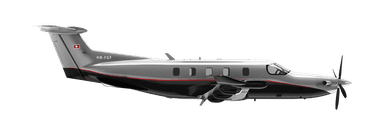


Compare Aircraft
Compare private jet categories side by side, range, cabin, passenger capacity, and hourly cost to find the right aircraft for your mission and route.
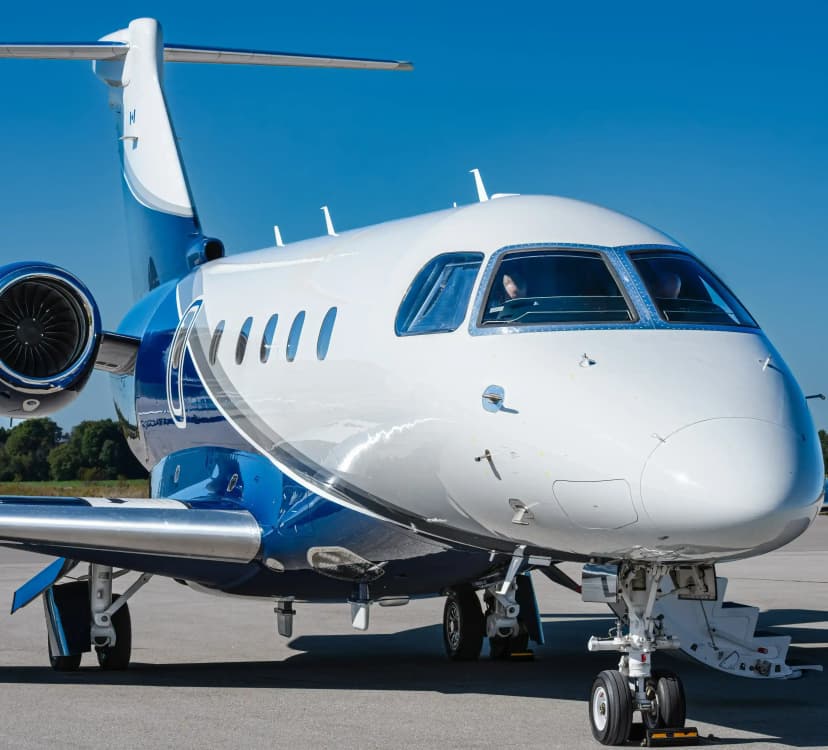
Your Guide: Hogani Jets Uncensored
Hogani Jets Uncensored: Submit your details for your free guide to private jet programs, honest truths, pricing and more.
